

Corned beef is a St. Patrick’s Day classic, but great results come down to time and temperature. Whether you searched for corn beef recipes, corn beef temperature, or traditional corned beef and cabbage, understanding how brisket cooks will help you get tender results every time.
Whether you cure your own brisket or start with a store-bought corned beef, understanding how heat affects the meat is the key to getting it right.
(This method also works for a homemade pastrami!)
Quick Specs
- Cure Time: 7–10 days (Critical for holiday planning!)
- Internal Cook Temp: 190°F–205°F
- Water Simmer Temp: 190°F
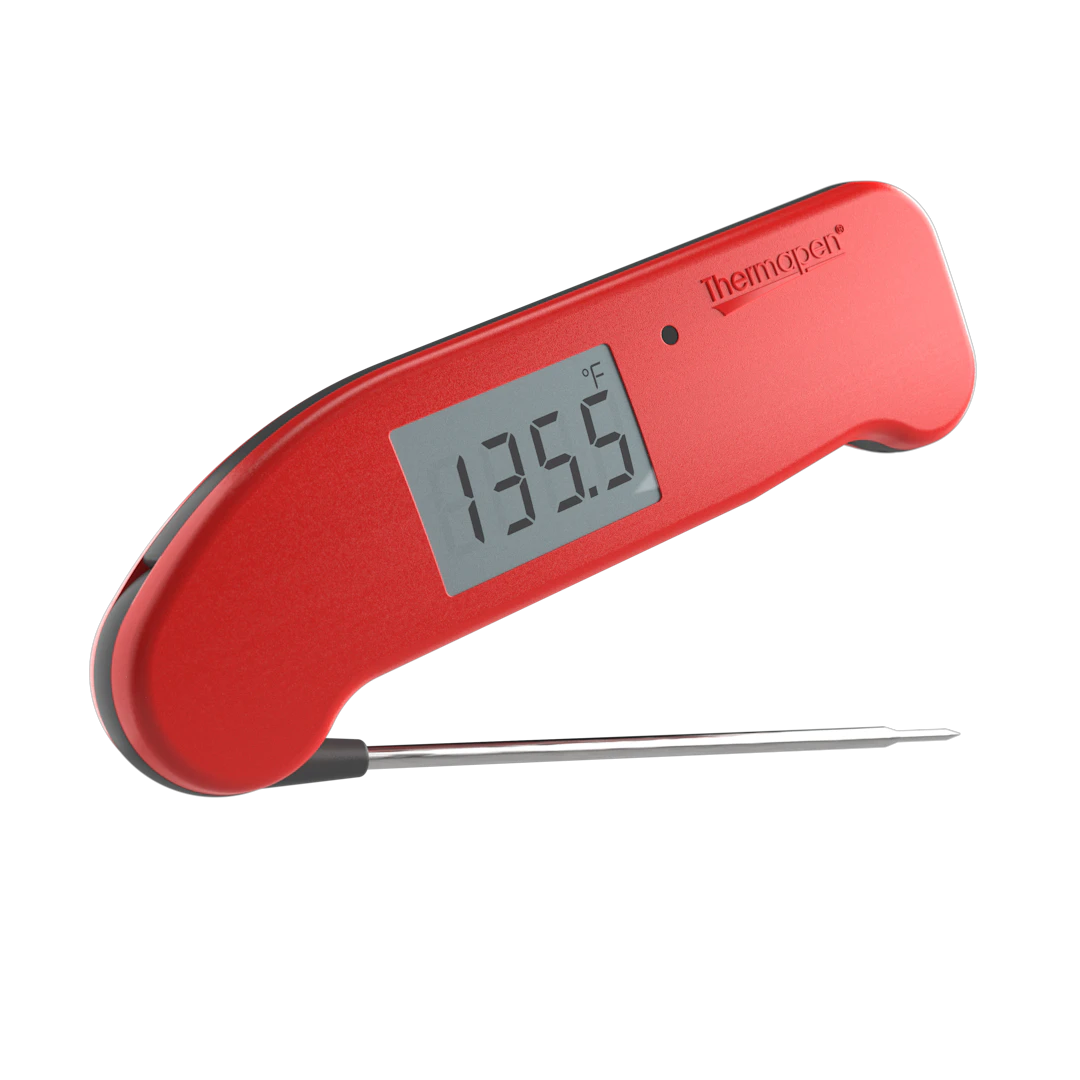
- Equipment: Thermapen ONE, RFX™ Wireless Probe Starter Kit, or ChefAlarm® Cooking Alarm Thermometer and Timer
Contents:
- History of corned beef and cabbage
- The importance of time and temp for corned beef
- Homemade corned beef cure recipe
- Cooking corned beef
St. Patrick’s Day Planning
If you plan to make homemade corned beef, start early. Corned beef takes about 7 to 10 days to cure, so plan your schedule backward from March 17.
Typical timeline:
Cook and serve: March 17
Start curing: March 7–10
Cure in refrigerator: 7–10 days
What Is Corned Beef, Really?
Despite the name, there’s no corn in corned beef.
The word “corned” comes from an old English term for large grains (or “corns”) of salt used to cure meat. Before refrigeration, curing with salt was one of the most effective ways to preserve food.
Today we still cure meat, but mostly for flavor, texture, and that unmistakable cured color.
Corned beef starts with beef brisket, a naturally tough cut loaded with connective tissue. The curing process transforms it into the flavorful cut we associate with St. Patrick’s Day.

How Corning (Curing) Works
“Corning” simply refers to curing meat with salt.
Salt curing has been used for centuries because it inhibits bacterial growth, making meat safer to store for long periods. But preservation isn’t the only benefit — curing also creates the distinctive flavor and texture we expect from corned beef.
To properly cure brisket, most recipes use Prague Powder #1 (pink curing salt). This curing salt contains sodium nitrite, which reacts with proteins in the meat to:
- Create the signature rosy color
- Develop the distinctive cured flavor
- Improve food safety during the curing process
The result is the tangy, savory brisket we associate with corned beef.
Why Corned Beef Became a St. Patrick’s Day Dish
Corned beef and cabbage is often associated with Irish cuisine, but the dish actually developed in the United States.
In Ireland, families traditionally ate cured pork with potatoes. When Irish immigrants arrived in America in the 1800s, pork was often expensive. Many Irish neighborhoods shared markets with Jewish communities, whose butcher shops sold cured beef brisket instead of pork.
Irish immigrants adopted the cured brisket and cooked it with cabbage to create a hearty and affordable meal. Over time it became the Irish-American dish we know today.
Why Brisket Needs Long Cooking
Brisket comes from the pectoral muscle of the cow, which does a lot of work supporting the animal’s weight. That means the cut contains a large amount of connective tissue made primarily of collagen.
Collagen does not soften at steak temperatures. It only begins to break down into gelatin once the meat climbs above about 160°F and continues to soften as it approaches 190°F and beyond.
That is why brisket must be cooked slowly and held at high temperatures for a long time.

Traditional Corned Beef Cooking
The classic method is simple.
Place the brisket in a pot of water and boil it for hours, adding cabbage, potatoes, and carrots toward the end of the cook.
This method works because the meat spends enough time above the collagen-melting range to become tender.
However, boiling aggressively all day has some downsides.
- Excessive boiling can push too much gelatin out of the meat.
- Long boiling can wash away flavor.
- Vegetables often become overcooked.
A more controlled simmer produces better results.
The Better Way: Controlled Simmering
Instead of boiling hard all day, maintain a gentle simmer between 190°F and 195°F.
This temperature range breaks down collagen efficiently while helping the brisket retain moisture and structure.
At this temperature, most corned beef becomes tender in about 3 to 10 hours, depending on the size of the brisket and the final texture you prefer.
Monitoring the Cook
Precise temperature control makes a big difference with corned beef.
RFX MEAT Wireless Probe
Using a wireless probe like the RFX MEAT Wireless Probe lets you track the internal temperature of the brisket while it cooks. Because the probe is waterproof, it can stay in the meat while it simmers in the pot. This allows you to monitor the entire cook without lifting the lid or disturbing the simmer.
RFX Gateway
Pairing the probe with the RFX Gateway sends the temperature data to your phone so you can track both the meat and the cooking progress from anywhere.
For corned beef, watch for the meat to climb into the 190°F range, then give it additional time for the collagen to fully soften.

When Corned Beef Is Done
Technically, corned beef is safe to eat once it reaches 145°F, but at that temperature it will still be tough.
For tender results:
- Sliceable texture: 190–195°F
- Very tender texture: 200–205°F
Once the brisket reaches your target temperature, hold it there for one to two hours to allow the collagen to fully break down.
You should be able to slide a thermometer probe into the meat with little resistance when it is ready.
The Bottom Line
Corned beef is not complicated. It simply needs enough time in the right temperature range for brisket’s tough connective tissue to melt into gelatin.
Hold the cooking liquid around 190°F, monitor the internal temperature with a wireless probe like the RFX MEAT Wireless Probe, and give the meat time to finish tenderizing.
Do that and you will end up with corned beef that is juicy, sliceable, and perfect for St. Patrick’s Day.
Many people search for corn beef, but the correct spelling is corned beef. The word “corned” refers to the large grains of salt historically used to cure the meat. Corned beef is typically made from brisket that has been cured in a salt brine with spices and curing salt.
Corned beef becomes tender when it reaches 190–205°F (88–96°C) internal temperature. While beef is technically safe to eat at 145°F, brisket is a tough cut that needs higher temperatures to break down collagen and become tender. Monitoring the internal temperature with your RFX Wireless for percision results.
Cooking time depends on the size of the brisket and the cooking temperature.
Typical simmer times:
3–4 lb brisket: about 3–4 hours
4–6 lb brisket: about 4–6 hours
Cooking at a steady simmer around 190–195°F helps the brisket tenderize without overcooking.
Frequently Asked Questions
A gentle simmer produces better results than a hard boil.
Boiling aggressively can cause the meat to lose moisture and flavor. Holding the cooking liquid around 190°F allows the collagen in the brisket to slowly break down while keeping the meat juicy.
Corned beef is usually tough for one of two reasons:
It has not been cooked long enough.
The internal temperature has not reached the collagen-melting range above about 160°F.
Brisket needs time in the 190°F range for the connective tissue to break down. If the meat still feels firm, continue cooking until a thermometer probe slides in easily.
Yes. A slow cooker works well for corned beef because it maintains a steady low temperature.
Cooking on low for 8–10 hours usually produces tender results. If you want to monitor the internal temperature during the cook, use RFX MEAT Wireless to track progress without lifting the lid.
Add vegetables toward the end of the cook so they do not become mushy.
Typical timing:
Potatoes and carrots: last 30–40 minutes
Cabbage: last 20–30 minutes
This keeps the vegetables tender while the corned beef finishes cooking.
For the perfect complement to Corned Beef on St. Patrick's day, see our Irish Soda Bread post.
For another way to cook your corned beef, check out our post on Smoking Corned Beef!



0 comments