

Are you in the mood to try something different this year with your Thanksgiving turkey? Why not try deep frying it this year? Some say a deep-fried turkey is the juiciest, most flavorful, crispy-on-the-outside, delicious bit of poultry ever to cross their lips. This project is packed with thermal critical control points that will determine the safety of the cook and the quality of the finished product—and we have all the tips you need.

We'll be using the ThermoWorks® Smoke X™ Multi-Channel Alarm Thermometer with an additional 12" Pro-Series® High Temp Probe so we can measure both the turkey meat and the critical oil temperature on the same device. Or you can use RFX MEAT™ to measure the turkey temp (but not the oil temp).
Why fry a turkey?
It's quick and frees-up your oven!
Deep frying your holiday bird will take less time than roasting does. Most turkeys take about 3 minutes per pound to fry. For example, a 14-pound turkey will take about 42 minutes to cook. While your turkey is cooking outside, the oven will be available for baking rolls, pies, and side dishes.
⚠️ Safety First
Frying a whole turkey in hot oil can be dangerous, and caution must be observed. Thousands of fires and injuries occur every year due to turkey fryer fires. Hot oil is highly combustible, and the pot of hot oil will be sitting directly over an open flame. Follow these important tips to ensure the safety of your cook.
- Keep a dry-powder, multipurpose fire extinguisher handy at all times. Never use water to put out a grease fire, it will cause the hot oil to spatter, thereby spreading the fire rapidly.
- Take it outside. Set up the turkey fryer more than 10 feet away from your home, covered patio, roof overhangs, and any other building.
- Set up the burner on stable ground, concrete, or asphalt. Not a wood deck.
- Keep fryer away from children and pets.
- Never leave the setup unattended. Stay within a 10-foot perimeter of the hot oil at all times.
- Don't drink and fry. The process requires full, focused attention.
- Use a thermometer. Temperature control is crucial. Do not allow the oil to exceed 350°F (177°C).
- Thaw turkey completely. The dramatic temperature difference between a frozen turkey and the hot oil will cause furious bubbling and spillage. If oil spills over the pot it can start a fire, cause an explosion, and result in injury and property damage.
- Pat the turkey completely dry with paper towels. Water on the surface will splatter when lowering the turkey. Splatters cause grease fires.
- Turn off the gas completely when filling the pot with oil, lowering the turkey into the hot oil, lifting the turkey out of the oil, or when removing the pot full of oil from the burner.
- Wear an apron or chef jacket, safety goggles, and use heavy duty elbow-length gloves.How Much Oil Will I Need?

➤ Water Displacement for Oil Level
Too much oil in the pot will cause the oil to bubble and spill over the sides of the pot when the turkey is lowered in—and this is a dangerous fire hazard. Using enough oil and no more is an important safety precaution.


To measure the proper amount of oil needed:
Place the turkey (set on the stand if using) into the empty pot and fill with water until the turkey is covered. Remove the turkey and measure with a ruler the distance from the top level of the pot to the top level of the water. This will be the mark to which the pot needs to be filled with oil. If you add more oil than that, you risk a boil-over and a fireball. This is a VERY important step!
What Type of Oil?
An oil with mild flavor and a high smoke point is needed for this deep-frying project, and peanut oil fits the bill perfectly. Its flavor is very neutral and has a smoke point of about 450°F (232°C).
If you or any guests have a peanut allergy, corn, safflower, and sunflower oil are options with high smoke points as well.

Start the Turkey-frying Oil Temperature Low
Turkey frying becomes dangerous if the oil spills over the side of the pot, and that happens when there is too much oil in the pot, or if it bubbles too violently. If you've used water displacement to accurately measure the amount of oil needed, that safety variable is taken out of the equation.
So what causes bubbling? 3 things:
1) A bird that's too cold (be sure to thaw it completely)
2) Water (pat the bird completely dry)
3) Oil temperature that's too high when lowering the turkey into the pot. Start with oil heated to 250°F (121°C), slowly lower the bird, then increase the oil temperature to 325-350°F (163-177°C)—do not exceed 350°F (177°C).

Seasoning a Deep-Fried Turkey
Aromatic vegetables and fresh herbs contribute flavor and moisture when roasting a turkey. But they can't be used for flavor when deep-frying. For rich flavor and moisture, inject the turkey with a brine, broth, or melted butter. We injected our turkey with melted butter that we infused with the aromatic herbs and spices we wanted. We simmered parsley, sage, thyme, rosemary, black pepper, garlic, and a cinnamon stick in one cup of butter until it was very aromatic. We then strained the butter and let it cool somewhat. We injected that into our bird.
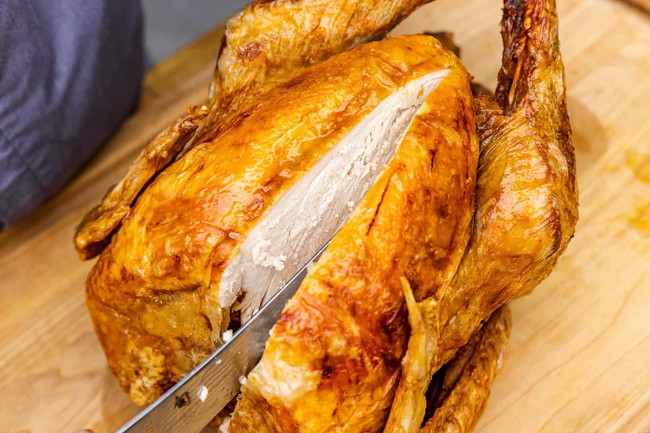
Frying your Thanksgiving turkey is a fun method to try if you haven't before, and the results are fantastic: golden brown crispy skin with moist and flavorful meat. And did we mention crispy skin? If you can't get enough of salty, crisp skin, a deep-fried turkey is for you!
The safety of this project and quality of the bird hinge on so many temperature control components. Temperature affects the type of oil used, the need to pat the bird completely dry, the temperature of the oil when lowering the turkey, oil cooking temperature, and the pull temperature of the meat.

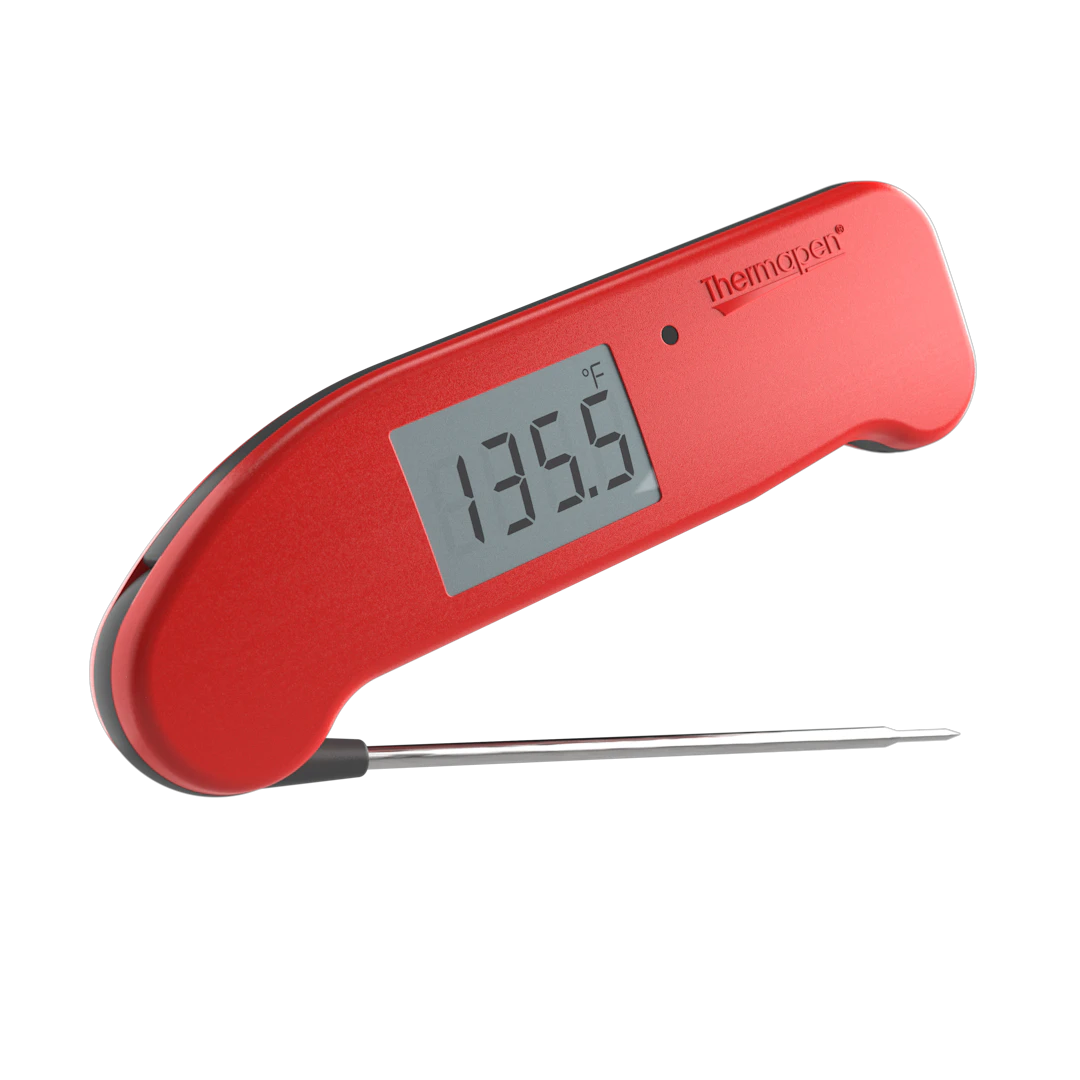
By following safety guidelines and tracking temperatures with a multi-channel thermometer like Smoke X4 or RFX MEAT™, and verifying turkey temps with a Thermapen ONE, this deep-fried project will go off without a hitch.


0 comments