

With fall in full glory, I'm turning to hearty, comforting dishes. I haven't abandoned the grill to the snowy wastes just yet (and, in truth, I do grill some throughout the winter), so something hearty, autumnal and grilled sounds just about right, and that's where grilled duck breast comes in.
Duck breast is wonderful. Warm, hearty, steak-like, and perfect when cooked to medium-rare (yes, it's safe), duck is a great autumn meal. Whether you hunt your own or buy farm-raised, grilled duck breast is the perfect fall dish. Here, we'll give you the thermal tips you need to succeed at grilling duck breast. Hint: you do not want to just toss this meat on the grill! Read on to learn more.
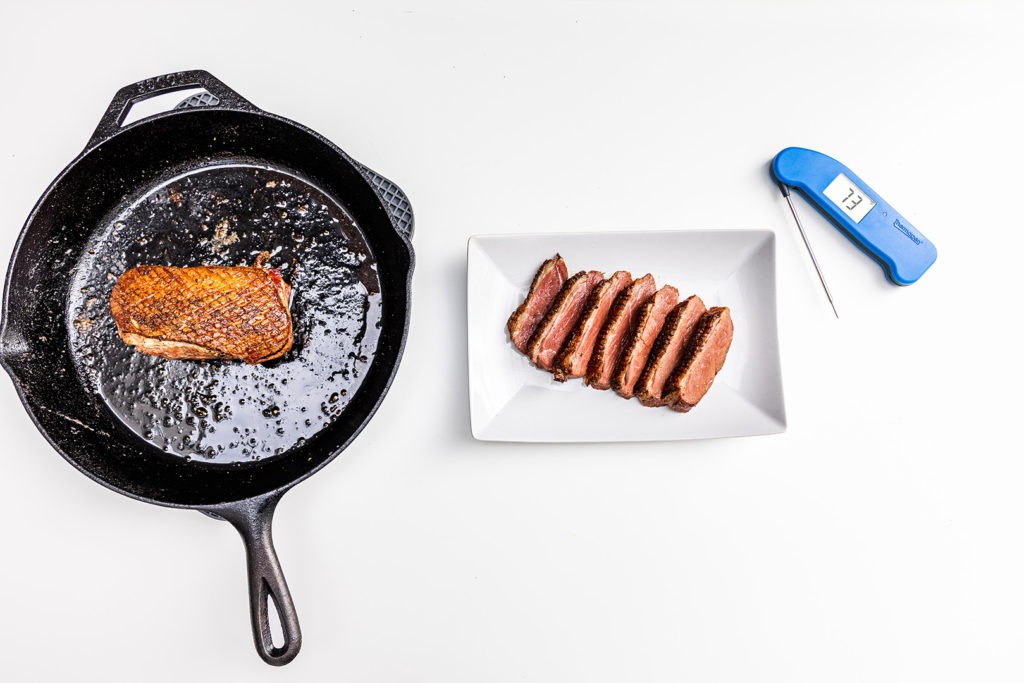
Grilled duck breast difficulties
Best when done no higher than a tender medium-rare, duck breast takes care and time to cook properly. While it's by no means difficult, I wouldn't classify seared duck breast as "beginner" cooking.
Grilling duck breast presents two particular difficulties. One is that the skin side and the meat side need to be cooked differently. The skin must be well-rendered, lest the thick fat layer remain squidgy and gummy. A well-cooked duck breast will have skin that is crisp and toasty, like bacon, with no hint of chewy fat. The second difficulty stems from the first: if all that fat were to render out onto the coals of a grill, the resulting fireball would leave nothing but a charred, inedible mess.
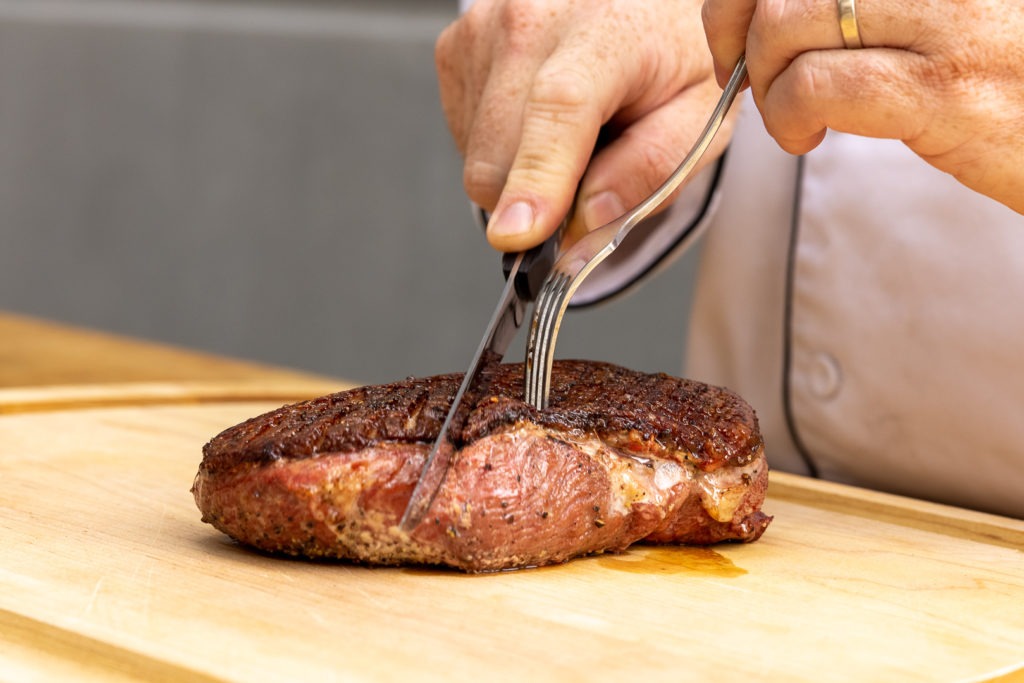
Grilled duck breast solutions
The solutions to both of these problems come in one handy, sturdy package: a cast-iron pan.
By cooking with a cast-iron pan set on the grill, we can catch all the rendered fat, keeping it from dripping down onto the glowing coals and igniting. This allows us to take the time to properly render the breast without trepidation. Plus, by catching all the fat, we can repurpose it for other culinary purposes after this cook.
When rendering duck breast, it's important to keep the pan from getting too hot. A single layer of coals—perhaps even spread out a little—set below the pan is enough to keep the fat bubbling slowly without popping, splattering, or getting angry.
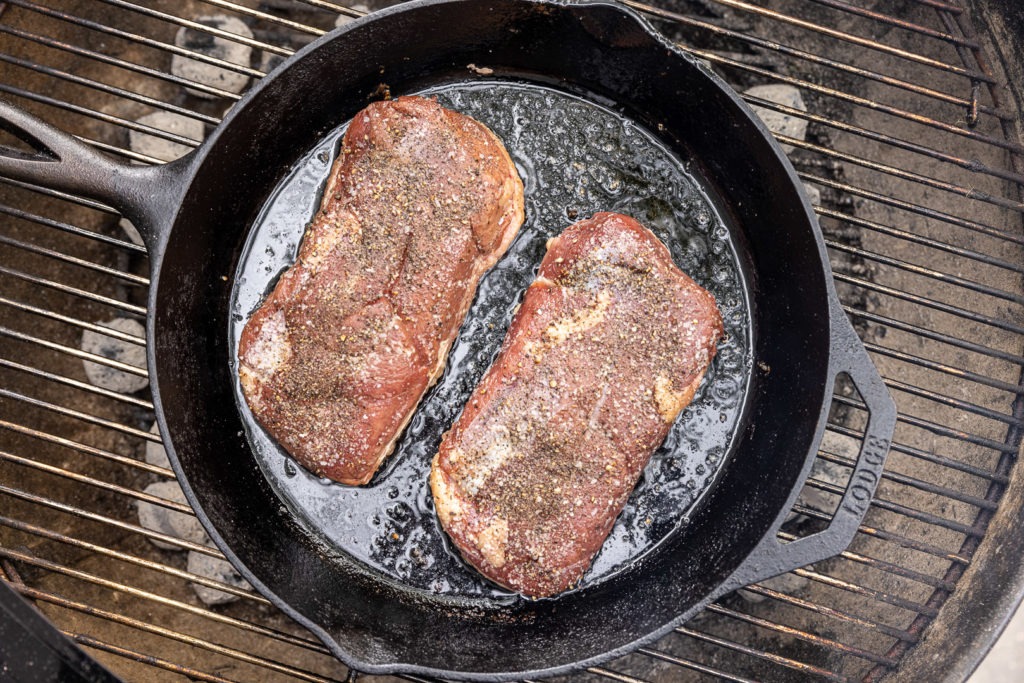
Grilling duck breast
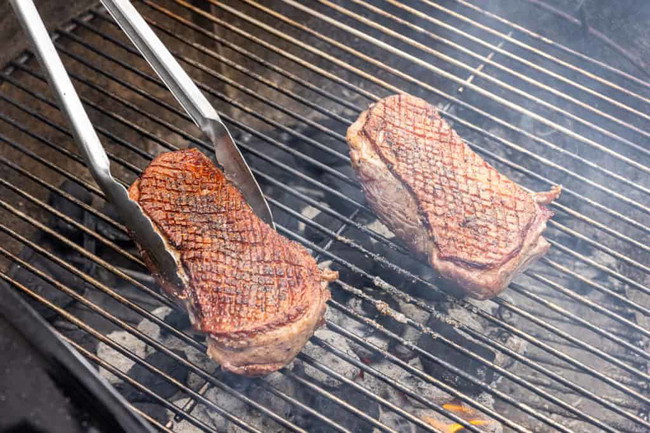
"Wait. So why not just cook the duck inside? That hardly counts as grilling." Wrong. Once the fat from the skin side is well rendered, we move the duck, meat-side down, over the direct heat, adding a little more charcoal to the fire. As the juices and, yes, some of the fat drip down onto the coal bed they pyrolyze and re-condense on the surface of the meat—which is a fancy way of saying that the meat comes out tasting all grilly and delicious.
Depending on your ambient conditions, your duck will have cooked to some extent during the rendering phase. If it's chilly out, I'd do the rendering with the lid down on your grill to allow the duck to cook gently in the ambient heat. Why? Well, we don't want one side (the meat side) to have to spend a long time over direct heat, pumping thermal energy in. The meat side could get overcooked, robbing us of a nice, even medium-rare. By putting the lid on the grill, we warm the whole breast while the fat renders, decreasing the necessary searing time.
Give the duck a couple minutes over the open coals, then start checking it with your Thermapen® ONE to look for the proper doneness. There will be some carryover, so you'll want to pull the meat from the heat at about 130°F (54°C). Let it rest for a minute or two and it should be perfect.
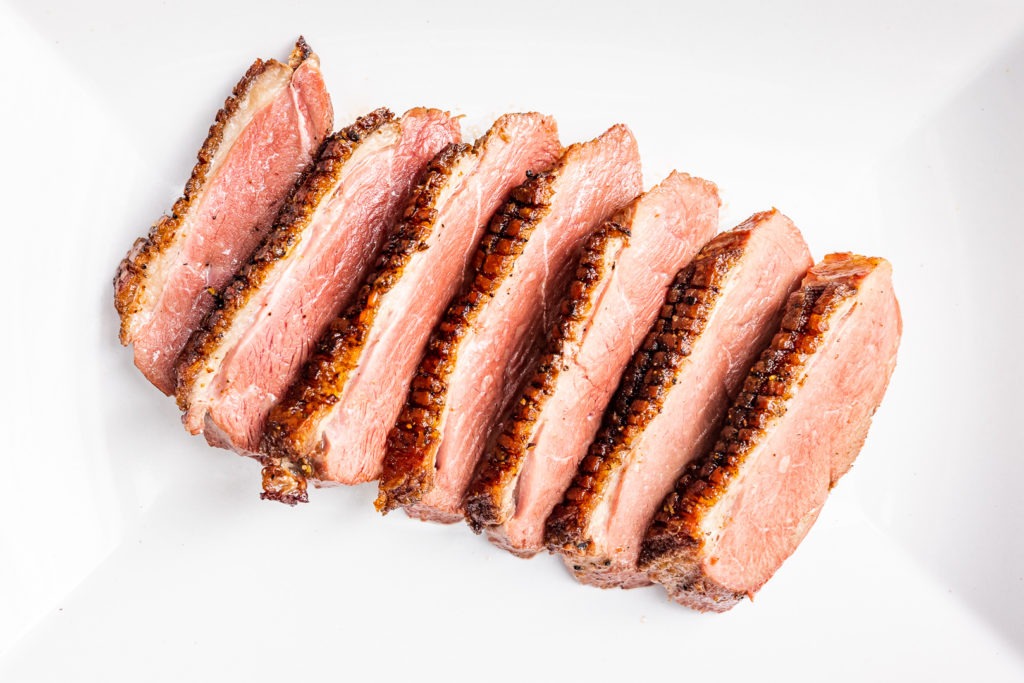
Getting the added flavor benefit of the grill on top of already-succulent duck is a win/win. And by cooking with thermal smarts—using a pan to render and catch the fat then checking the temperature with your Thermapen—you're sure to get duck that you'll be proud to serve. Give it a shot and let us know how it goes!



0 comments