

We've established that french fries fried in beef tallow are more delicious than those fried in vegetable oils. But high-quality tallow isn't always easy to find in stores. Making your own at home is a rewarding process that yields a high-smoke-point oil with incredible flavor and longevity.
What is Tallow and Why Use It?
Tallow is the rendered fat of beef or mutton. In the kitchen, it is a stable, highly saturated fat that solidifies at room temperature. Its saturation provides a longer life for the oil compared to unsaturated vegetable oils, which break down rapidly after repeated heating. Additionally, beef tallow has a higher heat capacity than peanut oil, meaning it can do more "heat-work" per degree.
The Best Fat Source: Beef Suet
While any beef fat can be rendered, the best tallow comes from beef suet. Suet is the crumbly, cake-like fat found surrounding the kidneys. It produces a purer, cleaner-tasting tallow than the trim from steaks or roasts. For the best results, ask your butcher to run the suet through a grinder, or mince it yourself in a food processor while it is partially frozen.
Critical Temperatures for Rendering
The goal of rendering is to melt the fat out of the cells while cooking away all moisture. Monitoring the temperature is essential to avoid "denaturing" the proteins and tainting the oil's flavor.
- 212°F (100°C): Water begins to boil off. As the water content drops, the temperature of the fat will start to rise.
- 230°F (110°C): The Target Temperature. This ensures that the moisture has been evaporated from the fatty bits without crisping or browning them, which would lower the smoke point of your final tallow.
How to Render Beef Tallow
Essential Tools
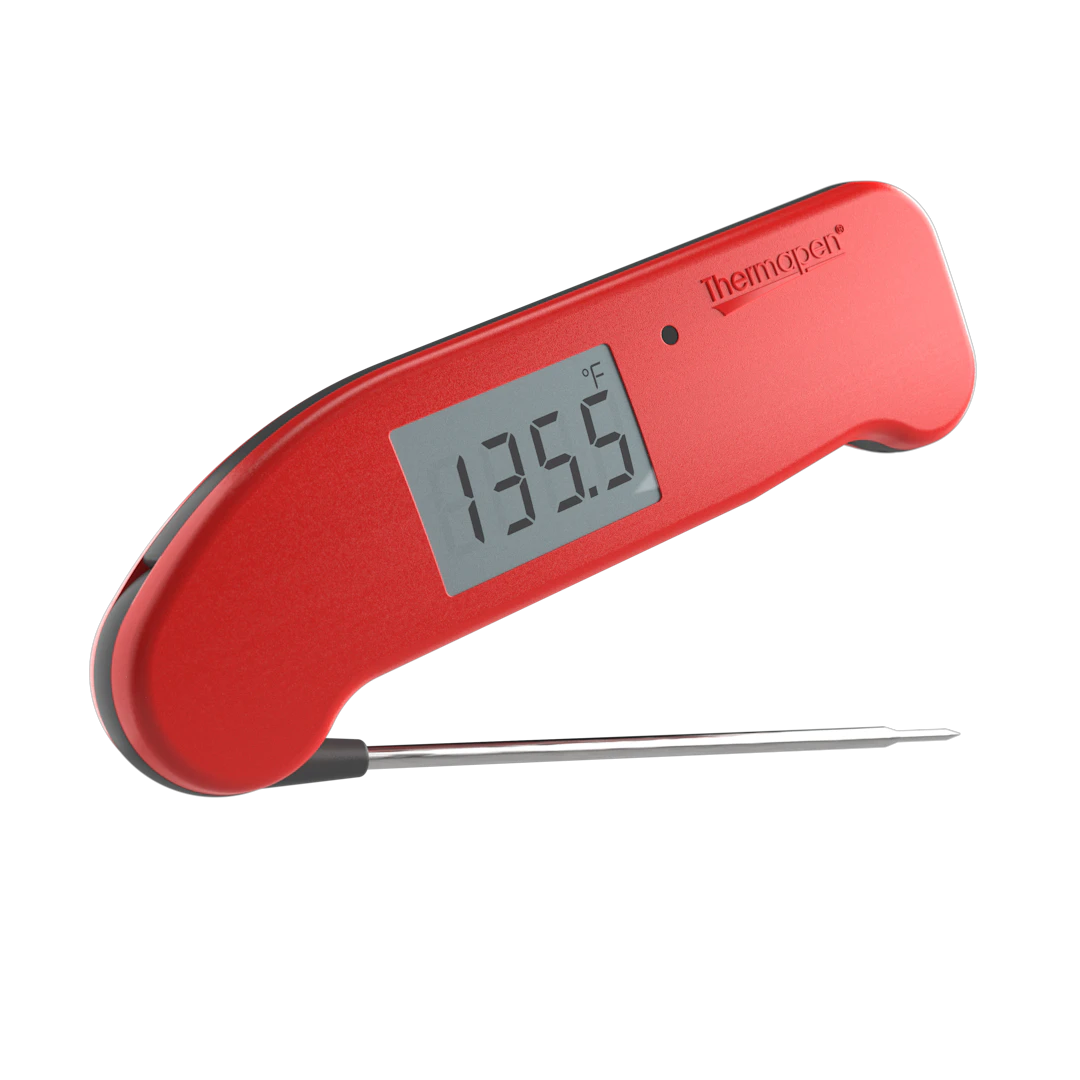
- Thermapen® ONE (For precision spot-checking)
- TimeStick® (To track rendering progress)
- Fine-mesh sieve or cheesecloth
Instructions
- Grind: Mince cold (partially frozen) suet in a food processor until it reaches a fine, crumbly consistency.
-
If the butcher has not ground your tallow, you will need to. Working in small batches, pulse the tallow in a food processor until finely minced. I recommend holding the pulse button while dropping a few pieces of tallow through the feeder chute at a time.

-
Simmer: Once all your tallow is ground, put it in a large pot and add enough hot water to peek through the tallow’s surface. Put the pot on a stove and turn the heat to high. The goal is to cook the proteins in the beef suet so that they don’t stick to the pan or each other while simultaneously starting to render the fat from the cells.

-
Skim: As the mixture simmers, skim off the "scum" that forms on the surface to ensure a cleaner final product.

-
Evaporate: Once the pot stops producing copious scum, let it go at a high simmer. You’ll want to keep an eye on it, but it doesn’t need to be tended to constantly. Check on it from time to time to make sure it isn’t boiling over, clumping too much, or sticking to the bottom—get a TimeStick® and set it for 10 minutes, check on it, reset for 10 minutes, etc. You’re going to cook all the water out of the pot and out of the fat tissues. This will take some time! As the water dries out, the sound of the boil will change to a deeper gurgle.

-
Stir: Give the tallow a stir, scraping the bottom. If any bits are sticking to the bottom, scrape them up to prevent burning. This is when paying attention becomes more important. As the water dries out and the pot is filled more and more with rendered fat, those bits are going to start cooking to the bottom of the pot. A flat-nosed wooden spatula is a great way to keep that from happening.
-
Monitor: Use your Thermapen® ONE to check the fat temperature. As it passes 212°F, small bubbles will form as the last of the moisture sizzles out.

- The Finish: Cook until the fat reaches 230°F (110°C). Remove from heat immediately.
- Strain: Let the tallow cool for 30 minutes, then strain through a fine-mesh sieve or cheesecloth.
-
Store: Allow to cool at room temperature until solid. Store in the refrigerator for months or freeze for long-term use.

By using precision temperature monitoring, you transform beef suet into a golden, delicious oil perfect for the world's best french fries or high-temp sautéing.




0 comments