

The turkey is the star of the show on Thanksgiving Day, golden and juicy. But it can also be problematic. It takes up space in the oven, for one thing. Doesn't that bird know you have green bean casserole, sweet potatoes, and rolls waiting in line? Plus it is often overcooked, and half the skin—which we want ultra crisp—is soaked and squidgy at the bottom of the bird. But a little time-saving trick of laying the bird out flat while roasting is a complete game-changer on all fronts. If you're the type of person who thinks outside the box with an affinity for the unorthodox, keep reading. This fast-roasting turkey method is for you.

What is "Spatchcocking"?
The origins of the word spatchcock are vague and disputed, though it is generally agreed that the word comes from Scottish or Irish usages. No matter its origin, when the term is applied to whole fowl, it is equivalent to "butterflying." We'll do a deeper dive into the exact process below, but in essence, we flatten the bird out by removing the backbone and arranging the legs and wings around the breast, like rays shining out from a white-meat sun. This vastly increases the bird's surface area, much improving it over the semi-spherical shape it originally inhabits.
"But what," we hear you asking, "about the perfect turkey being brought to table to be carved by Grandfather?!?" And we suppose that is something of a fair question, but we would also remind people that Norman Rockwell was famous for being a painter, not a cook. Just because it's pretty doesn't mean it's the best way to cook something! We're not the only ones who think so, either.
Preferred by people who know
Mark Bittman of the NY Times, and the author of How to Cook Everything, once put together a minimalist Thanksgiving dinner to cut down on prep, cook time, and ingredients so he could have time and energy to actually enjoy the meal with family and friends. This method was part of it. Bittman's first spatchcocking video made its appearance in 2008. Since then a number of celebrity chefs have also applied the same method, with spatchcocking becoming an official foodie trend by 2012.
Kenji Lopez-Alt is another chef who swears by a flat bird! His discussion about and recipe for a spatchcocked turkey and many others can be found in his book, The Food Lab.
Cook after cook, professional after professional—people who know prefer the spatchcock method.
Advantages of Spatchcocking:
- It's a Timesaver: To take the time out of the turkey roasting process, Mark splits and flattens out the turkey. With the turkey flattened out, the amount of exposed surface area increases and the overall thickness of the bird comes down to a nearly even level. With this preparation, you can blast the turkey at a higher oven temperature to expedite the cooking process. Depending on the size of the bird, it could take as little as 45 minutes to cook all the way through. Spatchcocking addresses the issue not only of time, but oven space too. With the turkey flattened out, you'll still have room in the oven for pies, rolls, and anything else you may be baking.
- Flat Shape = Even Cooking: A turkey is pretty much spherical in shape; no wonder there are issues with even cooking! In a spatchcocked turkey, the legs will be far more exposed than a turkey in its natural shape. This is great because the dark meat needs to reach a higher temperature than the light meat in the breast.
- Juicier Meat and Crisper Skin: On a spatchcocked bird, all of the skin is facing up and fully exposed. This will result in a turkey with crackling, crisp skin and even browning all around. As the juices render from the skin, they help keep the meat nice and moist.
- Better Gravy: With the backbone removed, you have another component to add flavor to your gravy. Make a quick stock using the neck, giblets and backbone, and use that in addition to the drippings from the turkey to make your gravy. No need to use store-bought chicken stock to make the gravy. (Not that you'll need gravy for your bird … you won't. But you will need some for your potatoes.)
- The Drippings: Oh, the drippings! Fill the bottom of your sheet tray with carrots, celery, onion, parsnip, turnip, green apple, herbs, and lemon. As you cook your bird, the juices and butter (don't forget the butter) run down, not into the bird's own cavity, but into a hot pan filled with aromatic goodness. The veggies braise and cook in the juices, producing the BEST pan sauce ever. No need for thickener, no need for gravy. Just dip the meat in this stuff, scoop up the veggies with it, and you'll never want to cook your bird another way.
Disadvantages:
We've exhausted the good points of this method, but what are the drawbacks? The most common complaint about spatchcocking is that it "just doesn't look right". Well, we've already established that we don't need to hold onto that piece of ill-gotten nostalgia. The only real drawback is the anatomical aspect of the process. It could be deemed … unpleasant. For the squeamish. But really, it's quite satisfying once you give it a try.
Break Down the Bird
Enough talk about why spatchcocking is so great. It's so much easier than you might think! All you need are a cutting board, poultry shears, and a chef's knife. As long as you're not squeamish to the sound of bones breaking, it's a cinch.
Follow These Easy Steps:
- Pat the turkey dry and place it backbone side-up on a cutting board.
- Use poultry shears and cut on either side of the backbone, starting from the bottom cutting up toward the neck. If you get to an area that you can't get through with the shears, use a knife to crack through. You have now removed the backbone. Set aside to use when making your gravy.


- Make a cut either down the center of the breastbone or one cut on either side of it. Turn the turkey breast side up.
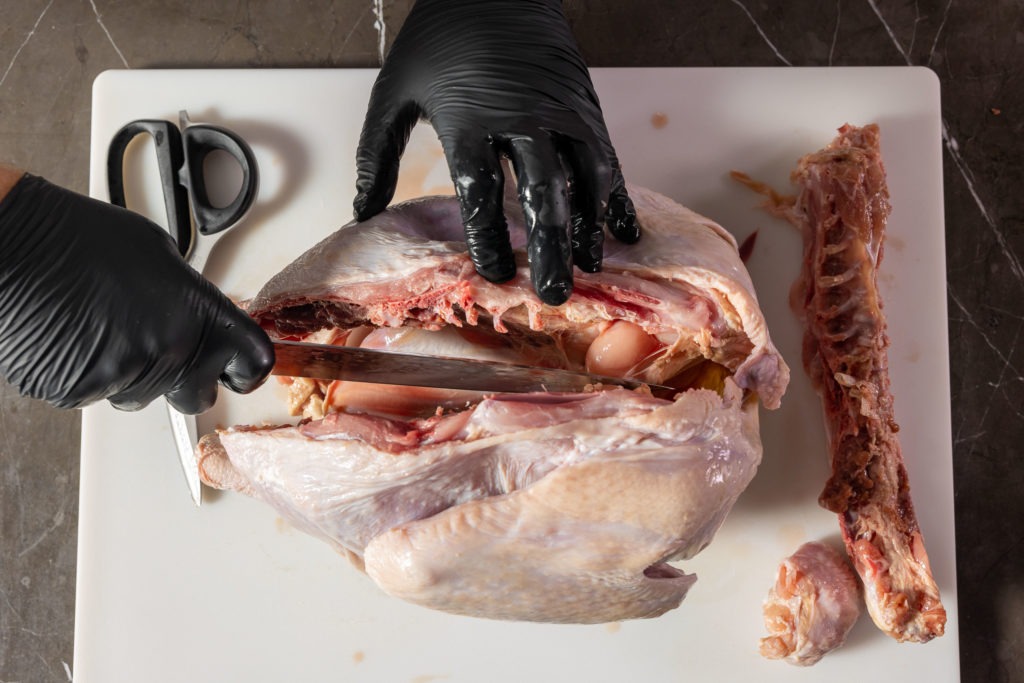
- Flatten the bird out by pressing down on the breastbone with your palms, and break it (ribs will break too). You may need to stand on a stool for more leverage.

- Tuck the wings under and move the legs out toward the side. Trim the excess neck skin. Your bird is now spatchcocked and ready to go.

Spatchcocked turkey roasting temp
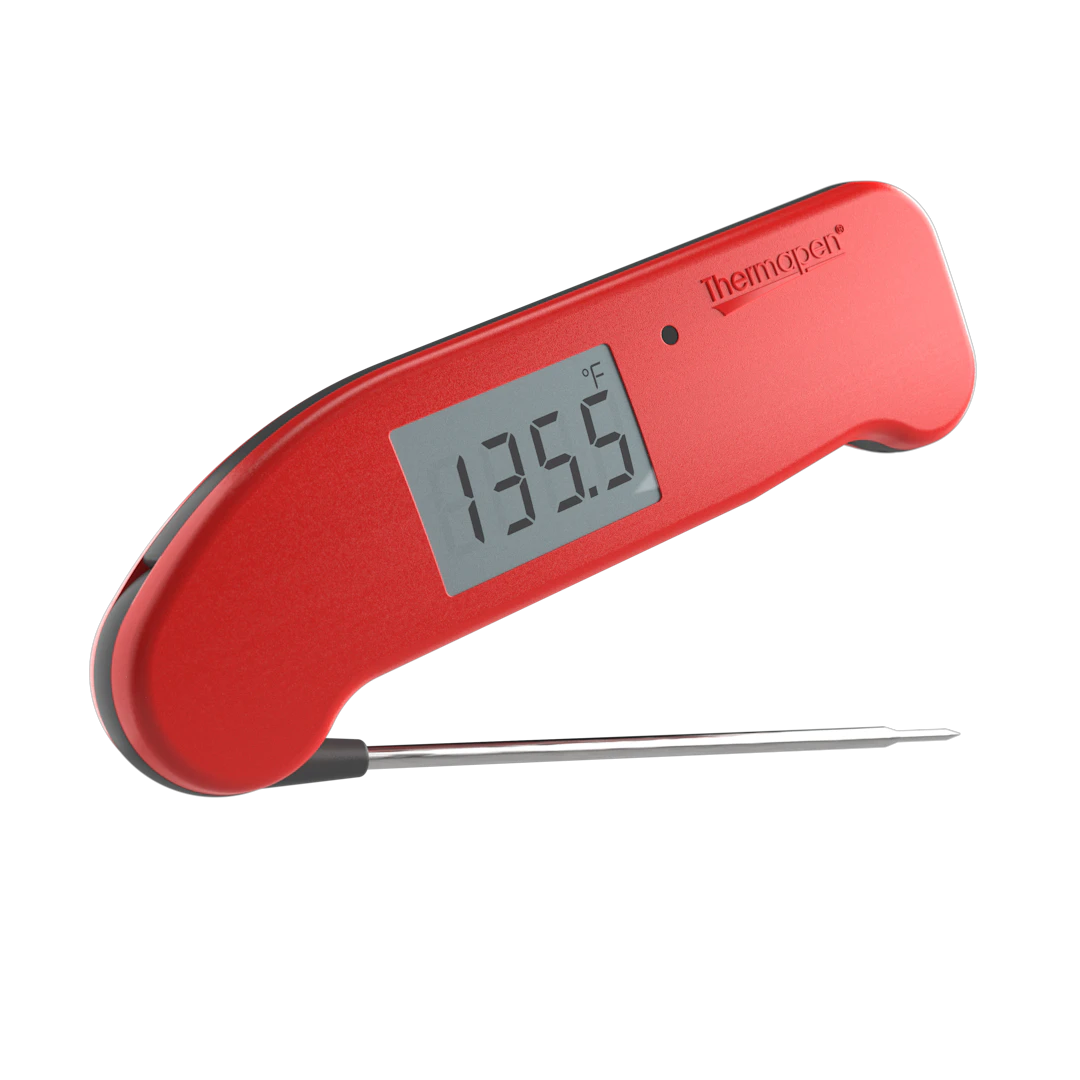
Once your bird is, well, flattened, it's time to roast. Cook your bird at 425°F (218°C) until it reaches an internal temperature on your ChefAlarm® or RFX MEAT™ Wireless Probe Thermoemter of 155°F (68°C). (If that seems low, read our article on chicken internal temps—the same concepts apply to turkey as they do to chicken. Trust us, a turkey cooked to that temp will be WAY juicier than one cooked to a higher temp.) Verify that temperature with your Thermapen® ONE to make sure you don't find any lower temperatures. If you don't, you're done! Chances are you'll have cooked a 16-pound turkey in about 90 minutes. Wow!

We hope you give this unorthodox turkey a try. It is better in every way and will provide you with a turkey that people will actually enjoy eating, not just pretend to like. Stick to our recommended temps, don't forget the aromatics, and you'll be crowned Thanksgiving royalty, for sure.


0 comments