

There are beef cuts that we don’t work with enough. Butcher cutting charts around the world have a surprising degree of variance, meaning that there are cuts of beef and of pork in, say, France that no one knows about in Finland, and there are Finnish cuts that are unknown to the Portuguese, etc. Because of their relative anonymity in other cultures, they go unseen outside their homelands. Here in America, picanha roast is one cut that we don’t use enough.
We’ve written about picanha steaks before, but this is the first time we’re considering the whole roast itself. Picanha roast—also called sirloin cap roast, rump cap, or rump cover roast—is a delicious cut that is still relatively affordable, despite higher beef costs. So now is a great time to give it a try. You and your family will be surprised how satisfying this cut can be, if prepared properly.
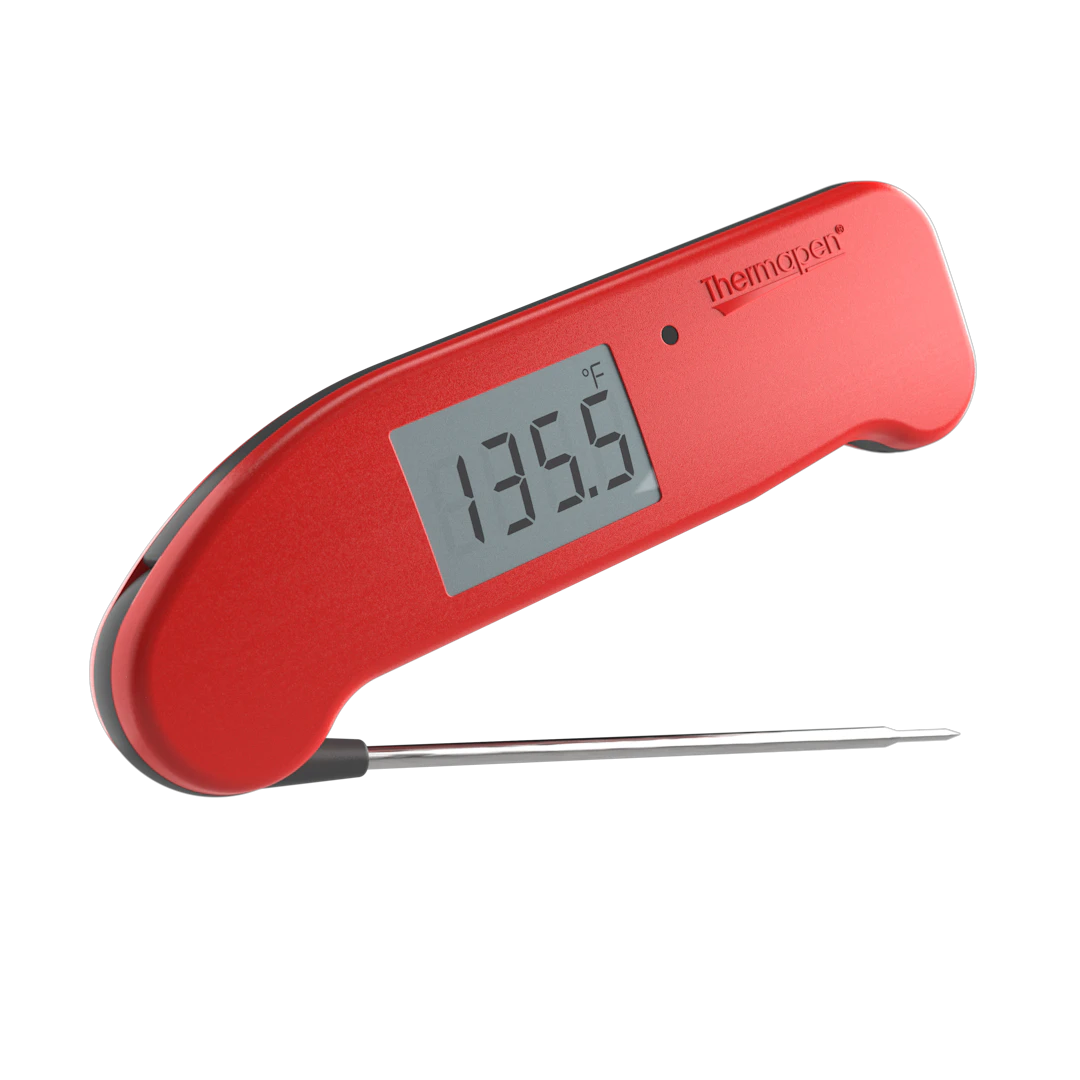
Here, we’ll take a look at a simple preparation for this tasty roast along with the temperatures to make it turn out perfectly. Grab your Smoke X2™ and your Thermapen® ONE and let’s hit the patio!

Doneness temperatures for picanha roast
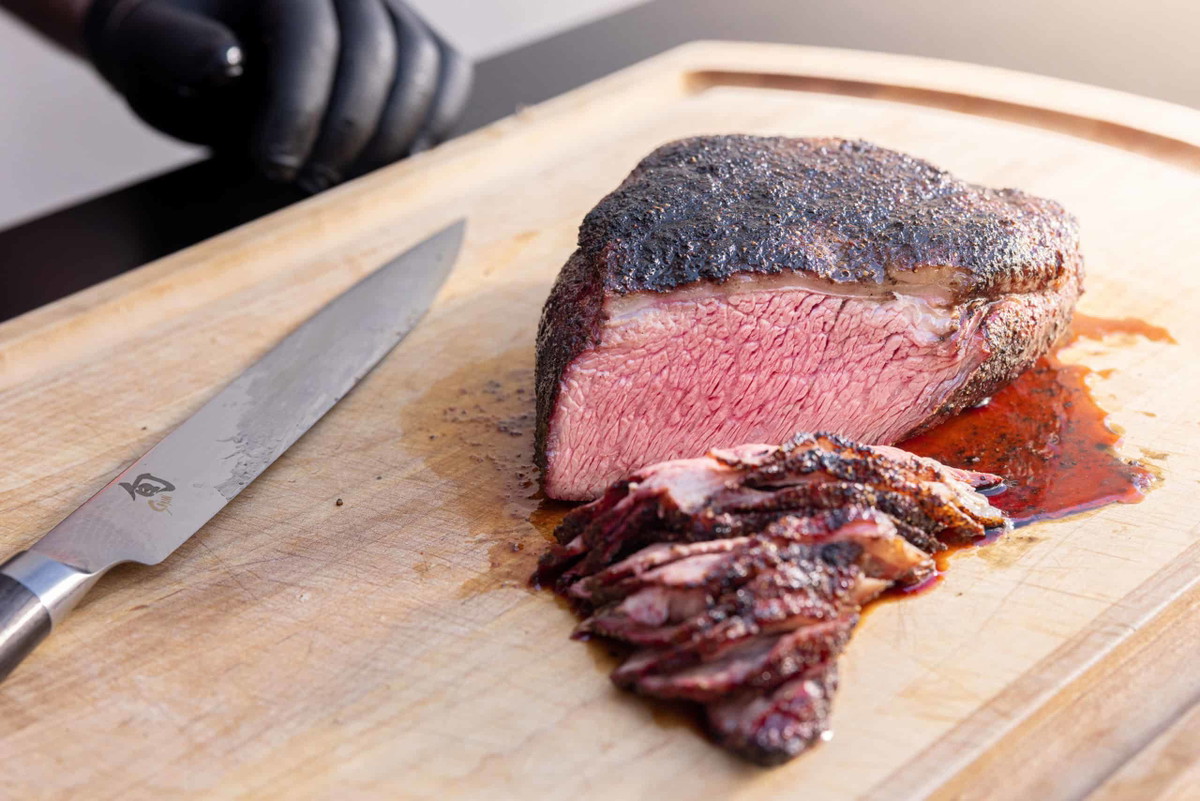
Though picanha comes from just above the rump roast, you do not need to cook it hard to be tender. It is a “steaky” cut, so rather than cooking it until it falls apart, à la chuck roast or brisket, we’ll aim for a juicy medium-rare. Medium rare picanha roast is done cooking between 130 and 134°F (54 and 57°C). That low doneness temp means we don’t have to fight a stall or do any collagen/gelatin transformations.
The large dimensions of this roast, however, make it a perfect candidate for a two-stage cook. After cooking our roast to 115°F (46°C) over indirect heat, we fanned the fire in our grill to prepare it for searing. A nice, hard sear brought our temperature to within carryover range of our desired pull temp and made the meat oh, so tasty!

Cooking temps for picanha roast
In order to get that perfect rosy red finish in the roast, we need to cook it gently. Searing it hard the whole time will result in a overcooked roast on the outside by the time it reaches internal perfection. But, we still want the tasty byproducts of a good hard sear (flavor compounds!), so what are we to do?

As we hinted at above, the best answer is to cook the picanha in two stages: a low/slow stage followed by a high heat sear. Now, if you’ve spent much time on this blog, you know there’s nothing new about this method. An ingenious solution for one cut of meat doesn’t mean it can’t also be an ingenious solution for another cut of meat!
We heated our smoker, using Smoke X2 and Billows® BBQ Control Fan, to 275°F (135°C) for the initial cook. When it was time to sear, we removed our damper plate and heated the smoker to grilling temp. If you’re measuring surface temps here, go for at least 425°F (218°C). Sear the roast, flipping it frequently to not overcook it. The results are stellar!
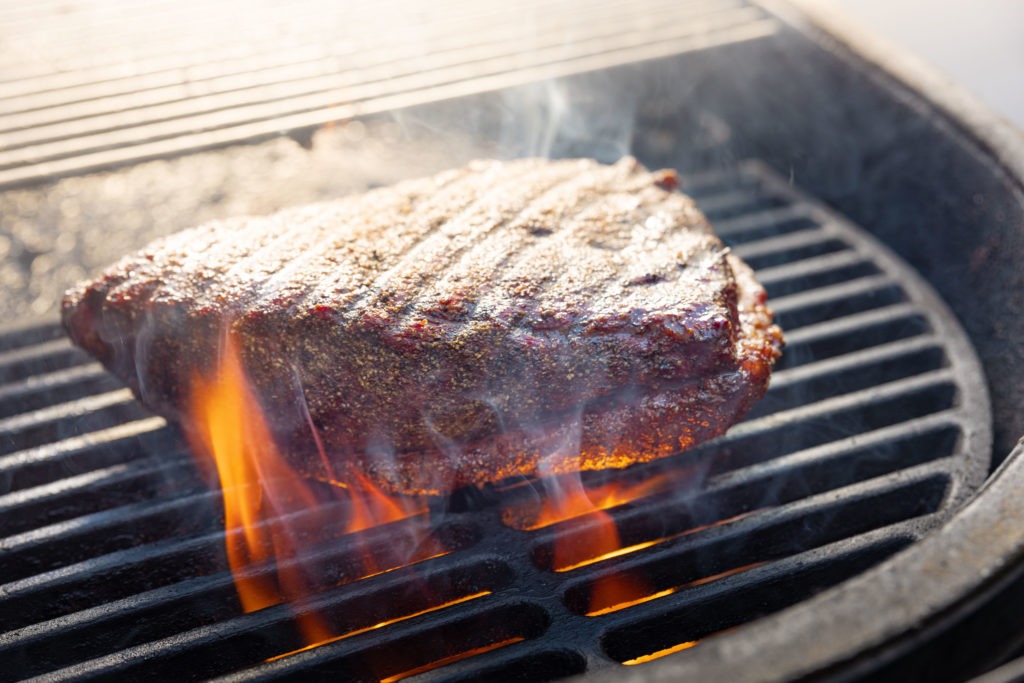
It used to be the case that tri-tip was the fun new cut in the butcher’s case. They could be had for a pittance and if you had a lead on where to get one, you were the only person asking for it. That is no longer the case! However, picanha roast is stepping into that position. It is still relatively unknown (your butcher might not even know it by that name). Take advantage of its relative obscurity and cook yourself some juicy, tender, mega-flavorful picanha roast. It’s easy, it’s delicious, and it won’t set you back a whole paycheck.




0 comments