

Pumpkin pie is a holiday favorite that will be on everyone's table this Thanksgiving. Nothing beats homemade pumpkin pie with tender, flaky crust made from scratch. But sometimes the crust is soggy, or the pie filling gets overbaked and cracked because you can't tell when it's done. So how do you avoid soggy crust and overcooked pie filling? It's all about temperature.
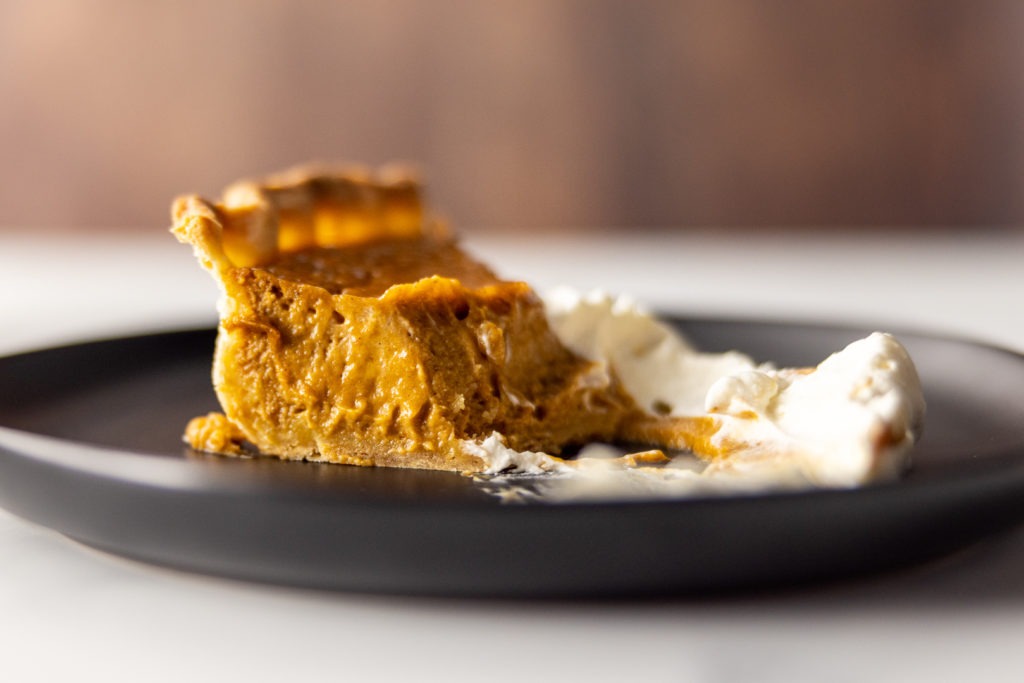
The First Secret to Flaky Crust: Keep the Dough Cold!
The key to a flaky crust is to keep the pie dough cold while you work with it!
Chilling the ingredients and dough helps prevent gluten development. Gluten is formed when two types of proteins (glutenin and gliadin) in wheat flour bond with water, and is what gives doughs their elasticity and extensibility. Dough that has been overworked or has gotten too warm will be tough and chewy like bread, not tender and flaky like pie crust should be. Specifically, the water and butter need to be kept ice cold while you form your pie crust dough.
Cut the butter into small bits first and then put those bits into the freezer for 30 minutes before making the dough. The butter and water should be below 40°F (4°C). This typically means you'll need to add ice to the water from your faucet to chill it.
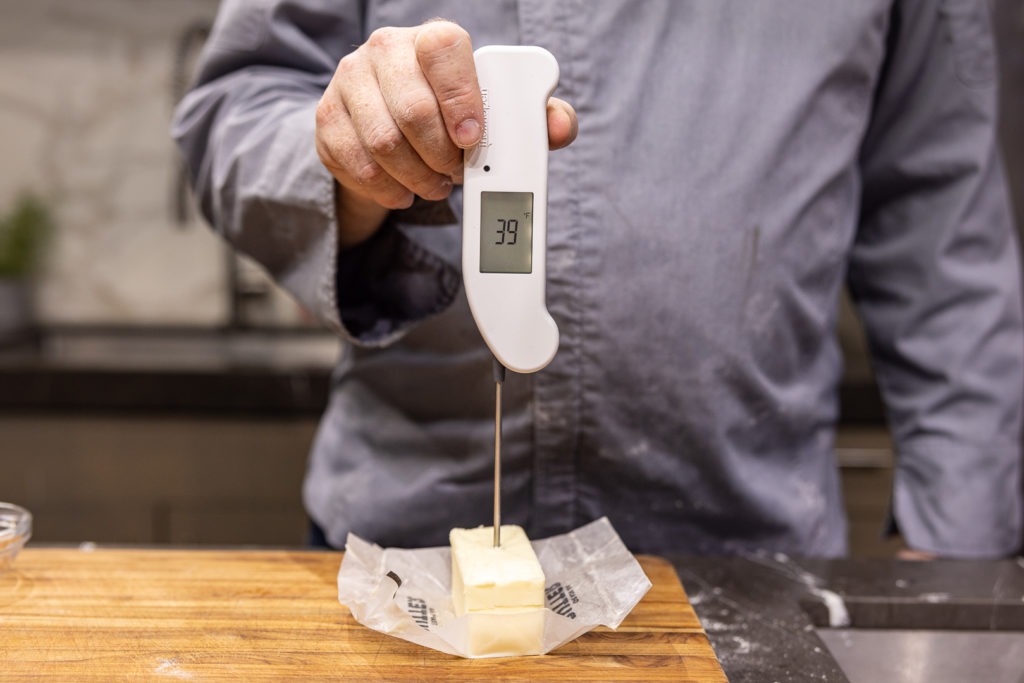
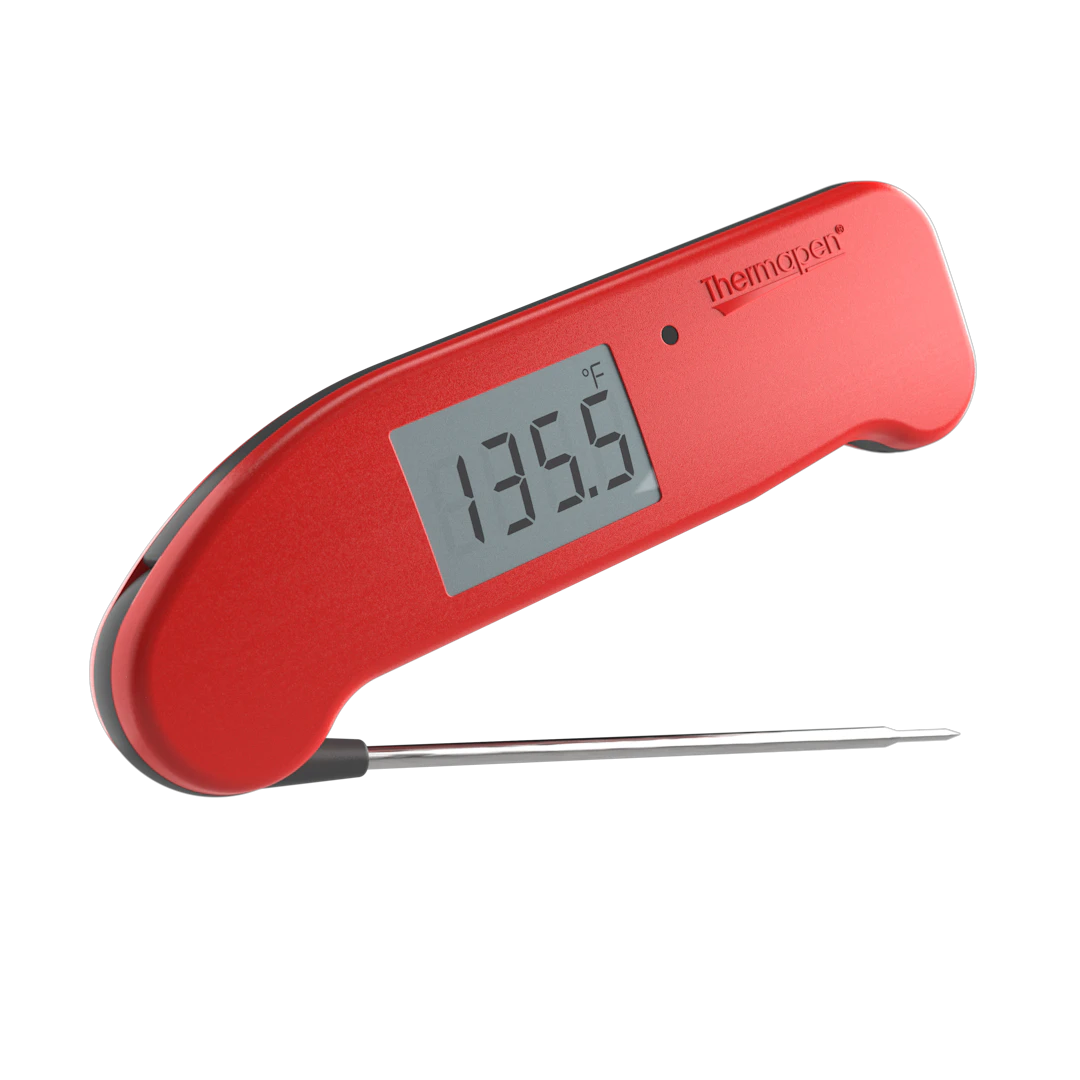
*Test the water and butter's temperature with an instant-read thermometer like the Thermapen® ONE.
Work Quickly: The longer the ingredients are left at room temperature and more time spent making the dough, the warmer the dough will be. Pull the butter out of the freezer right before putting the ingredients into the food processor and work quickly to get the dough into the refrigerator as soon as possible. The friction from mixing in the food processor will increase the temperature of the dough. Pie dough should be handled with mixing and kneading as little as possible.
☼ Time Saving Tip: Save some time and make your Thanksgiving pie dough now! Store your pie dough discs in the freezer, then thaw them in your refrigerator the day before you're ready to bake pies. Just be careful not to let the pie dough get too warm before you roll it, place it, and fill it. Begin rolling your pie dough while it is still stiff with cold.
The Second Secret to Perfect Crust: Blind Baking
Here is the secret to pumpkin pie with a never-soggy pie crust: Pre-bake the pie shell on high without the filling!
A for the crust, pre-baking the pie shell (sometimes called "blind baking") ensures that the crust will be cooked all the way through—crisp and tender from top to bottom—before you fill it. Plus, with the shell already baked, the filling will never have to spend a moment in an oven that's too hot.
The Secret to Silky Pumpkin Pie Filling
As with the crust, there are two secrets for silky-smooth pumpkin pie filling. The first is to mix the ingredients so that they are smooth before you even begin baking. That can be accomplished by using a blender or a food processor to mix them. You can use a whisk if you need to, but you'll get better results with some machine power on your side.
The second secret is that pumpkin pie has a doneness temperature.
Inaccurate Pumpkin Pie Doneness Testing
Most pumpkin pie recipes tell you to test for doneness in one of two ways, both of which are problematic.
- Bake until a knife inserted comes out clean. This will only happen if your pie is well on its way to overcooked.
- Tap the side of the pan and the center should still be slightly jiggly. "Slightly jiggly" is a very subjective way ot judge doneness. You don't want it to stay jiggly once it has set up!
Using these inaccurate methods of testing for doneness, it's easy to err on the side of overbaking the pie, just to be safe. But then the filling ends up cracking and can become curdled rather than smooth and silky.
Use an Instant-Read Thermometer to Check Pie Doneness
Egg Doneness Temperatures: Pumpkin pie filling is a mixture of simple ingredients that set up when cooked because the pie mixture contains eggs. The protein in eggs begins to firm up in the temperature range of 140-150°F (60-66°C). But egg mixtures—custards—set around 160-180°F (71-82°C). The more diluted the egg mixture, the higher the doneness temperature will be. The perfect pull temperature for pumpkin pie is 175°F (79°C).
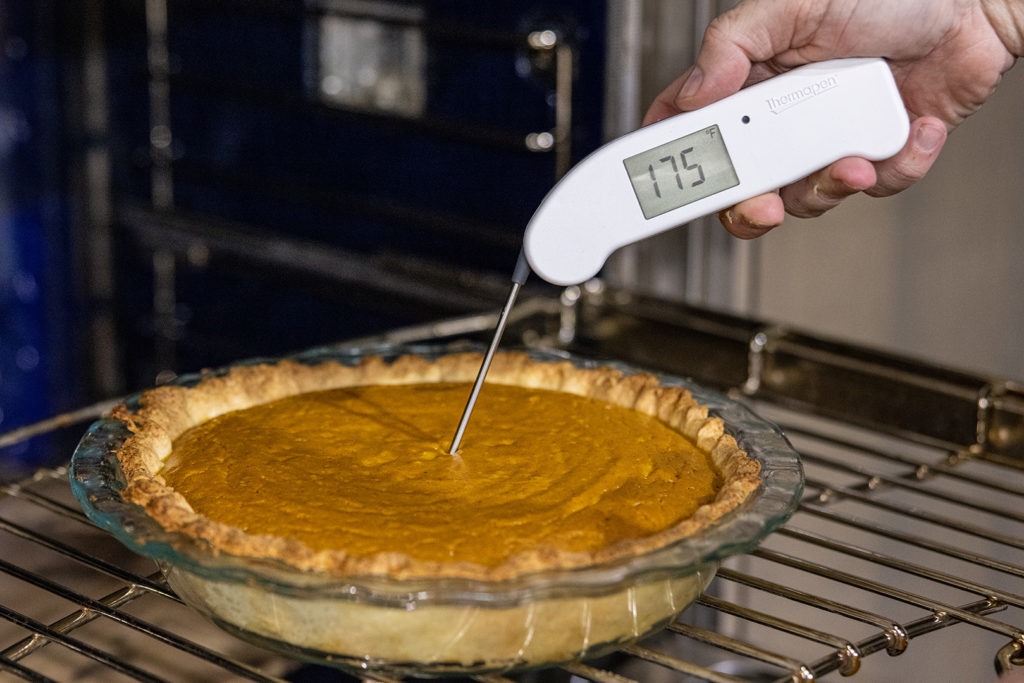
➤ Bake it Gently: For the best texture, custards should be baked at gentle, low oven temperatures, and cooked just until the eggs solidify and no further. Checking the internal temperature is the best way to determine the set point of the custard.
Many pie recipes call for baking the filled pie at a high temperature (425°F [218°C]) to set the structure of the crust before lowering the oven temperature to finish cooking the filling more gently. But pie fillings for pies like pumpkin and pecan are delicate and can be toughened or dried out by initial high temperatures. America's Test Kitchen recommends cooking the filled pie at an initial 400°F (204°C) for 10 minutes, then lowering the heat to 300°F (149°C) for the remainder of the cook. The results are ultra smooth!
By quickly spot-checking with an instant-read thermometer like a Thermapen, you can see within a matter of seconds if your pie is done, or if it needs a couple more minutes. No jiggling required! Pull the pie out of the oven when your Thermapen probe inserted into the center of the custard reads 175°F (79°C).



0 comments