

Smash burgers are arguably one of the best preparations of a burger, and their rising popularity is a testament to their quality. Restaurant chains that specialize in them are growing rapidly (the style seems to have emerged in the Great Lakes region, but documentation on that is sketchy). And it is no wonder, because they are good.

Now, it is true that you can't cook them directly on a grill, but that doesn't mean you can't have them for your celebratory cookout. Just take your cast iron out to the grill and cook in the fresh air. Of course, you will need to temp your burgers to make sure they're done perfectly, but with a fast and accurate thermometer, that's no problem. Let's take a look.

What are smash burgers?
A smash burger, for those that don't know, is a hamburger, usually with cheese, that is made with very thin beef patties (made thin by pressing on the cooking surface) that have been cooked on a griddle or flat top.
You may be wondering why this version of a burger gets its own name. That's a fair question, and one with an easy answer. When griddle cooking thin patties like these, you end up with a much larger proportion of tasty, crusty Maillard browning per patty than you would get from thicker, meatier burgers. And if you're making cheeseburgers, it's also a higher proportion of cheese to meat. Add to those tastier proportions a drastically reduced cooking time, and you've got yourself a real contender for best burger.
How to make them at home
First, you need the right meat. 80/20 chuck is pretty much perfect for smash burgers. The higher fat content helps ensure juiciness, and the chuck just tastes good.
To make a smash burger, start with a ball of ground beef that is just larger than the size of a golf ball (about 2 ounces is just right). Season each ball with salt and pepper, and set them on a hot cast-iron griddle. As soon as they're in the pan, smash them flat with a firm spatula, pressing down on its surface with a rolling pin or some other sturdy object. Cook just until the crust forms on one side, then flip and finish the patties to a food-safe temp of 160°F (71°C).


J. Kenji López-Alt has given three rules for making good smash burgers:
- Use a good stainless-steel or cast-iron skillet.
- The heat retention capabilities of a heavy pan are necessary for good browning and crust formation in a short time. A stainless or cast iron pan is the way to go because non-stick coatings can't stand up to the high heat you want to get those crispy edges.
- Smash early.
- Waiting until the meat is really cooking before smashing will dry the burgers out.
- Don't leave any crust behind.
- The main point of a smash burger is the yummy crust ratio. If you flip your burger and half your Maillard browning sticks to the pan, it's a waste. Use a good spatula (metal if you have one) that will lift the patties cleanly from the cooking surface.
Won't smashing my burgers dry them out?
Many people have learned that it's not good to press down on your burgers while they cook, because doing so expels juices from them. Smashing them flat and thin then sounds like a recipe for dry, gross burgers. Not so! As Kenji has shown, it's exceedingly hard to press juices out of uncooked meat. It's only once the proteins start to coagulate and the fats start to render that the juice gets loose inside a patty. If you smash your burgers right when you put them in the pan, they'll cook as if they had always been that shape and won't experience any extra juice loss.
Smash burgers on the grill
Because of the amount of grease splatter that happens when you make smash burgers, it's a fanta
stic idea to griddle them outside on your grill. If your grill has a flat-top attachment, all the better, but you can just as easily take your cast iron skillet outside and heat it on the grill over a hot pile of coals to do the cooking. There's less cleanup, and your house won't smell like rendered beef fat for the next week (not that there's anything wrong with that!).
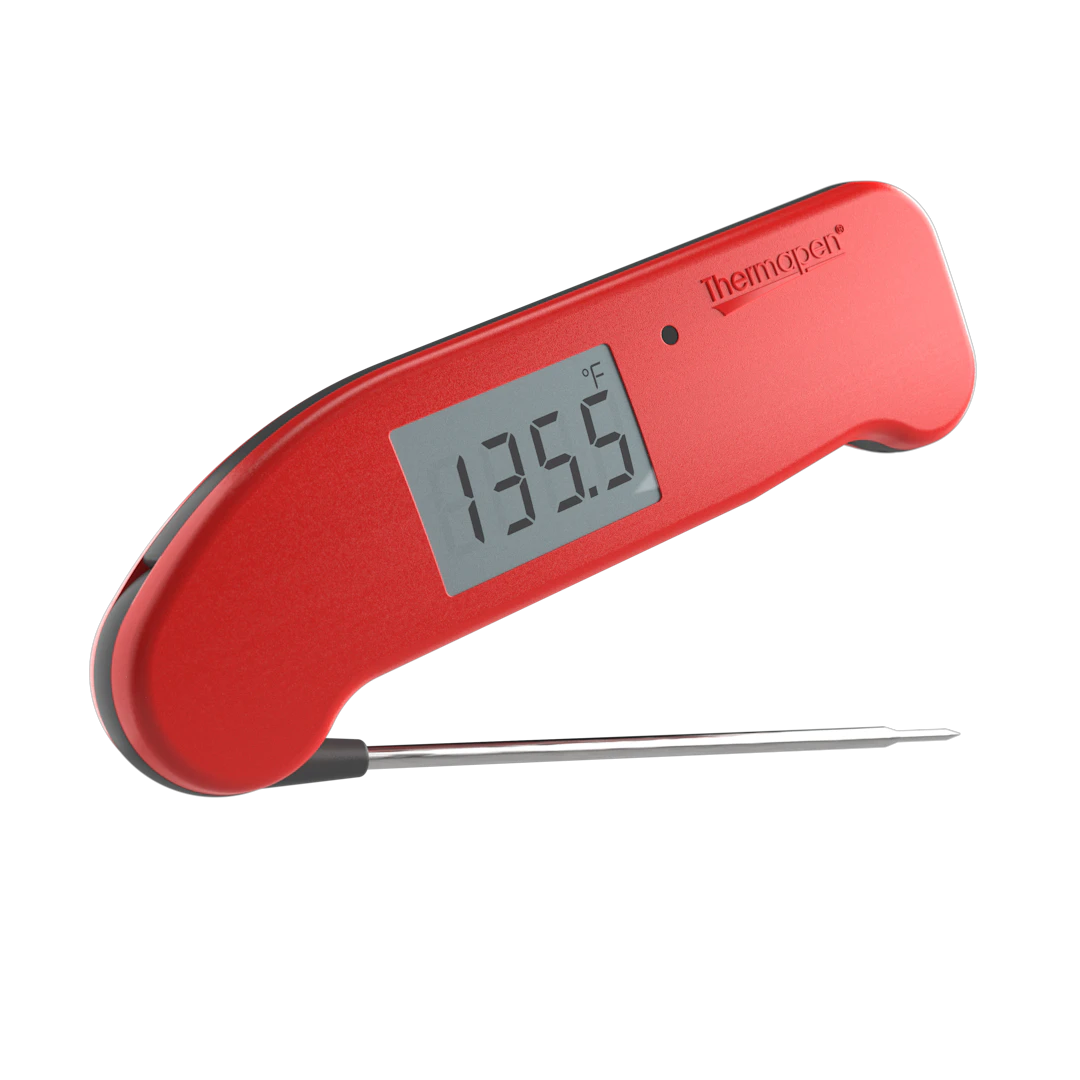
You'll need to make sure your pan is hot—at least 450°F (232°C), and of course you'll need to temp the burgers to make sure they're done. An IR thermometer like IRK-2 will get you your griddle temps, and a fast and accurate thermometer like Thermapen® ONE will help you know that your burgers are safely done.
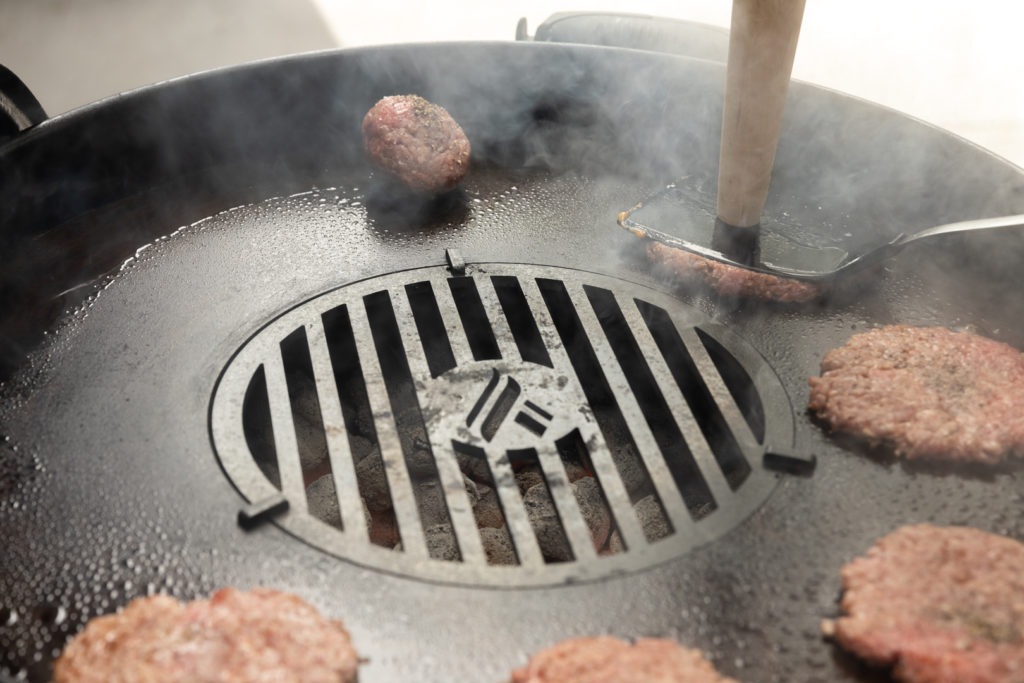
I love making these amazing burgers at home. The flavor is unbeatable and they take so little time to make. Cooking them outside so I don't have to degrease my stove and countertops is even better! Give them a try this weekend with your Thermapen to guide you and you'll love the results you get. Smash those burgers!
For more on cooking burgers right, check out our guide to perfect grilled burgers...that aren't smashed.




0 comments