

How to Smoke Corned Beef
Corned beef and pastrami share the same origin. Both begin as beef that has been cured in a salt brine. The difference comes after curing. Once the cured beef is coated in a peppery spice rub and smoked, it becomes pastrami.
That means the brisket you buy labeled “corned beef” is actually the perfect starting point for making homemade pastrami. All it takes is a bold spice crust, low-temperature smoking, and careful temperature tracking to transform it into one of the most flavorful deli meats ever made.
And with modern thermometry tools like RFX Wireless probe, you can track the entire cook from your phone and hit perfect doneness every time.

Turning Corned Beef into Pastrami
he curing step has already been done for you when you buy corned beef. What makes it pastrami is the next stage: seasoning and smoking.
Traditional pastrami is coated with a robust spice mixture dominated by black pepper and coriander. This heavy seasoning forms the iconic dark bark during the smoking process.
A classic pastrami rub often includes:
- Coarse black pepper
- Coriander
- Garlic
- Mustard seed
- Brown sugar
- Paprika
The result is a deeply savory crust that pairs perfectly with the rich, cured brisket underneath.
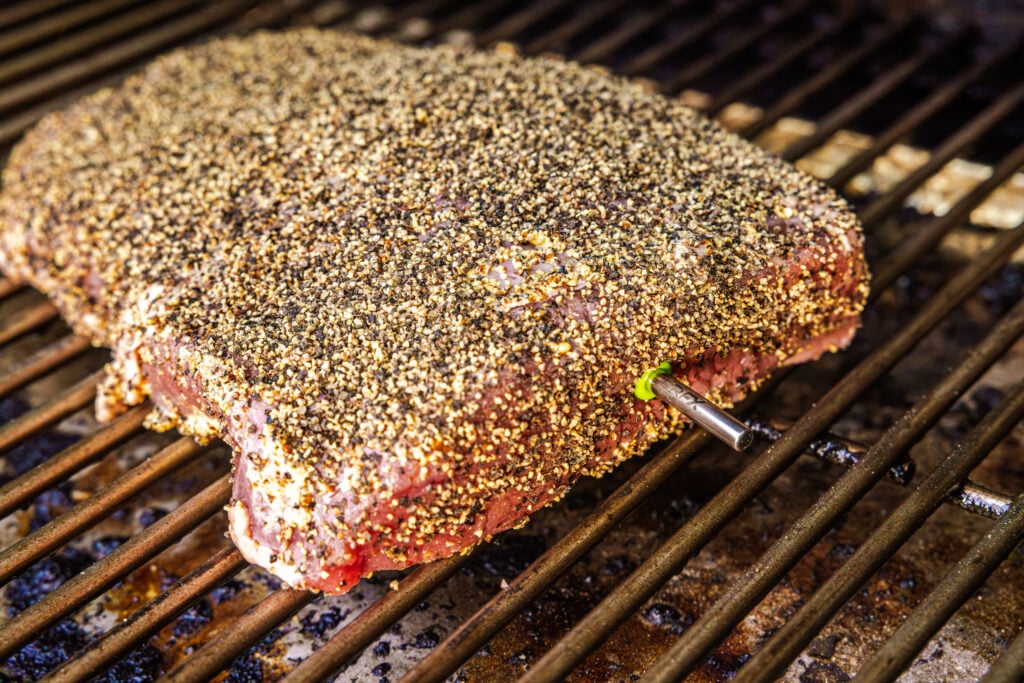
Smoking Pastrami
Set your smoker to 250–275°F (121–135°C). Insert RFX Wireless probe into the center of the brisket to monitor internal temperature throughout the cook.
Smoke the pastrami until it reaches about 160°F (71°C) internal.
At this point, the brisket will usually enter the stall, where evaporation slows the temperature climb. Instead of waiting it out, move the pastrami to a covered pan with liquid and finish the cook with a braise or steam.
How Long Does It Take to Smoke Corned Beef?
| Step | Temperature | Time |
|---|---|---|
| Smoke phase | 225–250°F smoker | 3–4 hours |
| Wrapped/steamed finish | until 195–205°F internal | 2–4 hours |
| Total cook time | 6–8 hours |
Why Temperature Matters for Pastrami
Brisket contains a large amount of connective tissue. That collagen doesn’t begin to fully break down until temperatures climb well above steak doneness.
Cooking pastrami to around 195–203°F allows that collagen to convert to gelatin, creating the signature tender slices you expect from deli-style pastrami.
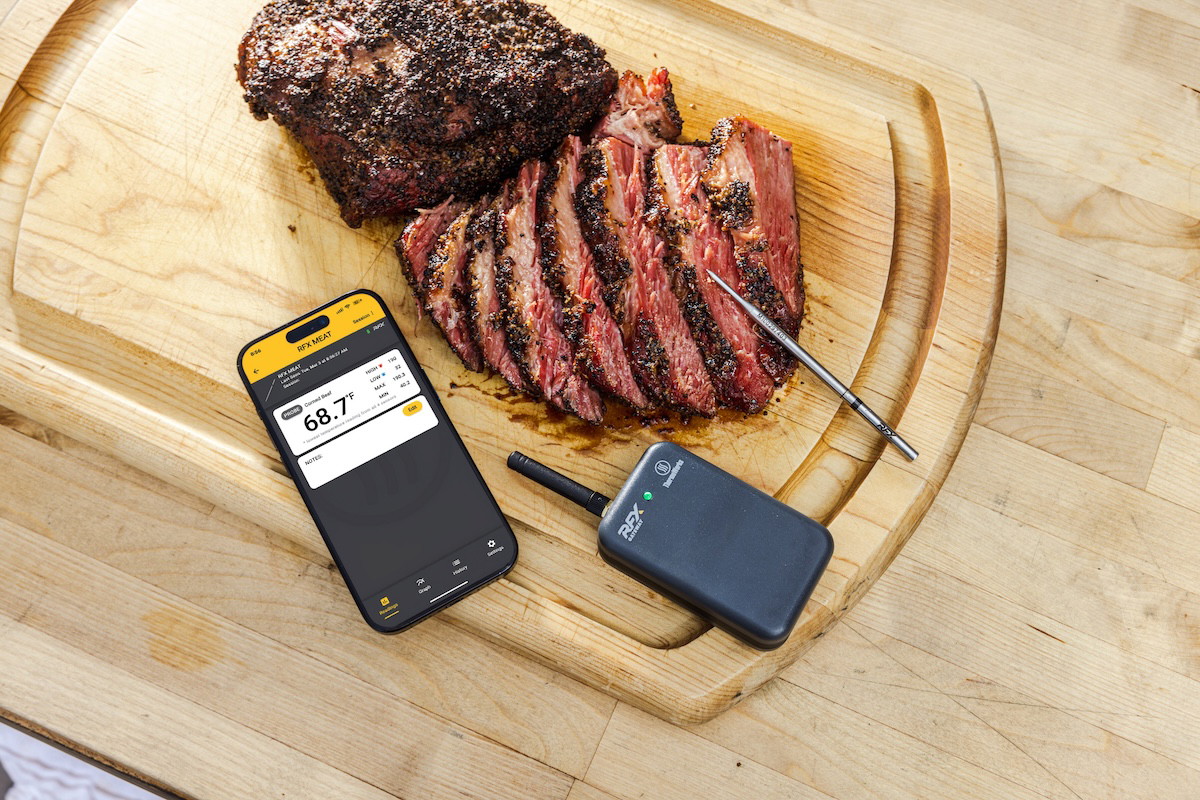
Wireless thermometry makes this process much easier because you can monitor the cook without constantly opening the smoker.

Slicing and Serving Pastrami
Once the pastrami reaches perfect tenderness, let it rest before slicing.
For classic deli texture:
- Slice thin across the grain
- Serve warm on rye with mustard
- Or pile it high for a homemade pastrami sandwich
The combination of curing, heavy seasoning, smoke, and gentle finishing heat creates a piece of meat that is far richer and more aromatic than traditional corned beef.




0 comments