

Few things taste better than a perfectly cooked steak. That sizzling sear, the savory crust, the juicy center—it’s the kind of meal that makes you feel like you nailed life. But great steak doesn’t happen by accident. Want that perfect doneness every time? It’s not luck—it’s temperature control. Let’s show you how to master it.
Why Steak Temperature Matters
Cooking steak to the right temperature isn’t just about preference—it’s the difference between a juicy, flavorful masterpiece and a dry, disappointing chew toy.
Temperature affects everything:
- Flavor & Texture: Medium-rare locks in juices and tenderness, while well-done cooks out both fat and moisture.
- Food Safety: Undercooking (especially below 125°F) can pose health risks, especially for ground or mechanically tenderized meat.
- Consistency: A thermometer eliminates guesswork, so you get perfect doneness every time—whether it’s ribeye or filet.
- Presentation: Slice into a steak that’s beautifully pink from edge to edge (not gray on the outside and raw in the middle) and you’ve nailed the gradient pros aim for.
Steak isn’t cheap—don’t leave doneness to chance. A few degrees make all the difference, and using a thermometer gives you control, not just hope.

Steak Doneness Levels & Temperature
Whether you’re a rare minimalist or a well-done warrior, steak doneness is all about internal temperature—not guesswork, color, or cutting it open. Hitting the right number means nailing the texture, flavor, and juiciness you want every single time.
Here’s the breakdown of doneness levels with their corresponding internal temps:
Steak Temperature Chart
|
Steak Doneness |
Temperature (°F) | Temperature (°C) |
| Bleu Steak | 110°F | 43°C |
| Rare Steak | 120–130°F | 49–54°C |
| Medium Rare Steak | 130–135°F | 54–57°C |
| Medium Steak | 135–145°F | 57–63°C |
| Medium Well Steak | 145–155°F | 63–68°C |
| Well Done Steak | 155°F and up | 68°C and up |
Pro Tip: Always pull your steak off the heat about 5°F before your target temp. It’ll keep cooking as it rests—this is called carryover cooking, and it’s the key to not overshooting
Carryover Cooking in Steaks
Heat is not static. Heat moves. In fact, heat tries its best to reach a state of equilibrium. When you take a steak out of a hot pan, the heat at the exterior of the steak will work its way into the center of the steak, raising the temperature inside the steak. This is what we call “carryover cooking”. Unless you’re cooking your steak sous vide, you will experience carryover cooking, and you need to plan for it. Thinner steaks like skirt steak have less thermal mass and thermal momentum and will experience less carryover than thick steaks. Thick steaks like porterhouse or tomahawk have more thermal mass and more carryover.
Carryover Cooking Rule of Thumb
In general, low heat carries over less and high heat carries over more. When cooking a steak on low heat, your pull temps will be 2–5 degrees below your target. The higher the cooking temp, the greater the pull gap, up to 10° or maybe even 15°F, depending on the size of the cut.
As Harold McGee says “The extent of afterheating depends on the meat’s weight, shape, and center temperature, and the cooking temperature, and can range from a negligible few degrees in a thin cut to 20°F in a large roast.”
In general, you can plan on 3–5°F (2–3°C) of carryover for a thinner steak and anywhere from 10–15°F (6–8°C) carryover for larger ones. Using RFX MEAT™ wireless probe to track the carryover via the min/max function can help you understand how carryover behaves in your kitchen with your steaks.

Steak Temps Don’t Change By Cut
Many websites that give information on steak doneness list the temperatures by steak-type. In reality, that is an unnecessary distinction, as all steaks experience doneness stages at the same temperatures. Whether you’re cooking up a porterhouse steak or a ribeye, medium doneness is 135–145°F (57–63°C). (The best way to get that temperature just right is, of course, to use a fast and accurate meat thermometer like Thermapen® ONE.)
To understand steak doneness, we need to look at what’s happening on a physical, thermal level. Doneness depends on the ways that the proteins have reacted to the thermal energy. When meat protein fibers cook to rare doneness—120–130°F (49–54°C)—they begin to denature, coiling and changing their structure. This changes everything about them. They become less slick and translucent. They start to lose their protein-bound water. And naturally-occurring tenderizing enzymes in the meat become very active.

If you heat the steak further to medium rare—130–135°F (54–57°C)—the protein fibers become slightly more fibrous, losing most of their slickness and turning an opaque, lighter red. The tenderizing enzymes actually deactivate, and juices will run from the steak if cut. And here’s the important thing: this is the same for every cut of steak, regardless of type. The proteins in a filet don’t behave any differently than the proteins in a NY strip.
Why Color Isn’t a Reliable Indicator of Meat Doneness
Judging doneness by color is both subjective and unreliable. What one person considers “rosy and slightly dark,” another might see as “pink and light.” These kinds of color-based descriptions are vague at best and misleading at worst. Color simply isn’t a precise or consistent indicator of doneness—especially when cooking meat. If you want results you can trust, temperature is the only way to know for sure.

How to Temp a Steak Like a Pro
To temp a steak, you must be sure you’re reading the temperature in the coolest part of the steak. The exterior of a steak is likely to have a significantly higher temperature than the center, so it’s critical that you measure the thermal center of the steak.
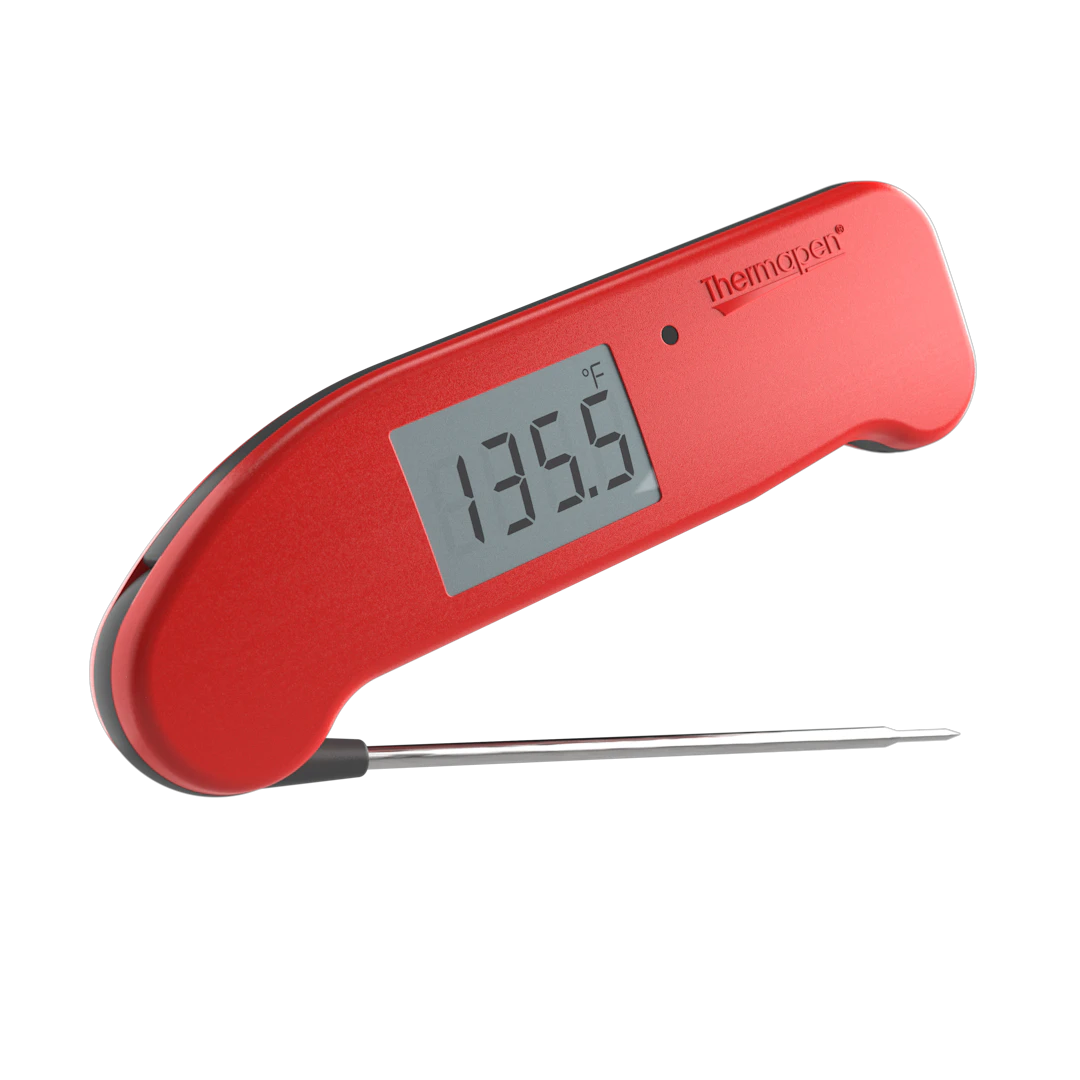
In order to get that temp just right, use a fast and accurate instant-read thermometer like Thermapen ONE. Thermapen is fast enough to show changing temperature gradients as you pull the probe through meat in real-time. Insert it most of the way through the steak, and draw it slowly out, watching the temperature change as you move the probe through the temperature gradients. Look for the lowest temperature in the steak.

Tips for Perfect Crust: Reverse Sear
One of the best ways to cook a steak is to use a reverse-sear method. In this method, you cook your steak at a low-ish temperature to reach a desired temperature, then sear the steak for the last few degrees to give it that wonderful charry crust. It works great on the grill with a two-zone setup or inside with a low oven and a hot cast-iron pan.
Not only is the reverse sear a great way to get a steak done right, it’s also a great way to get a lot of steaks done quickly. You can cook them all at once over indirect heat, then sear them off quickly to serve all at once. We’ll break down the steps for you here, so you can see for yourself.
- Preheat your grill for indirect (two-zone) cooking by turning the burners on one side of the grill to high while leaving the others off or stacking your charcoal under one side of the grill.

- Season the steaks generously.
- Place steaks on the indirect-cooking side.
- Probe at least one steak with an RFX MEAT wireless probe thermometer and set the high-alarm about 20°F (11°C) lower than your desired final temperature. We like medium rare steak, so we set it for 110°F (43°C). (If you’re using a wired-probe, make sure your cables don’t run across the hot part of the grill.)
- When the high alarm sounds, move your steaks to the hot side of the grill and sear them over medium-high heat for 2–3 minutes per side.
- Use your Thermapen ONE to check the temperature of each steak as soon as you flip them. Be aware that the last few degrees can go quite quickly. Also, keep an eye on the temperature rise in the app—if the temperature is climbing very fast, take the steaks off sooner.
- As each steak reaches about 10°F (6°C) below your desired finish temp, pull them from heat and allow them to rest.
- Let the steaks rest to finish their carryover. It’s extremely hard to do, but well worth it. Maybe grill something else while you let them rest to distract you. Toss some asparagus with a little olive oil, salt, and pepper (maybe some garlic, shallot, or lemon zest) and grill it. The distraction will take your mind off the juicy, meaty steaks that are resting on that plate over there, calling your name.
- Eat those steaks!

Steak doneness isn’t guesswork—it’s science.
With the precision of RFX MEAT and Thermapen ONE, you’ll hit your perfect temp every time. Forget cooking by color or timing it by feel—those methods are as outdated as overcooked sirloin. Whether you’re aiming for medium, rare, or somewhere in between, temperature is how you get steak done right.




0 comments