

Have you ever had tasso ham? If so, you almost certainly love it and need to read what we have to say. If not, then you should definitely keep reading, because you need to acquaint yourself with this amazing food.
Tasso ham is a classic ingredient from Cajun cookery that adds spice and flavor to gumbos, beans, greens, and just about anything that is simmered or boiled.
Unless you live within easy driving distance of the Gulf Coast, chances are that you don't see tasso for sale very often. Sure, you can buy fancy-pants gourmet versions of it at upscale markets, but in many ways, that seems to betray the frugal, down-home tradition from which this ingredient springs. More appropriate than buying "gourmet" tasso would be to make your own.
Here, we'll show you how to make amazing tasso in your own kitchen—including some surprising temperatures you should know about—so that you can get some real cajun flavor into your cooking.
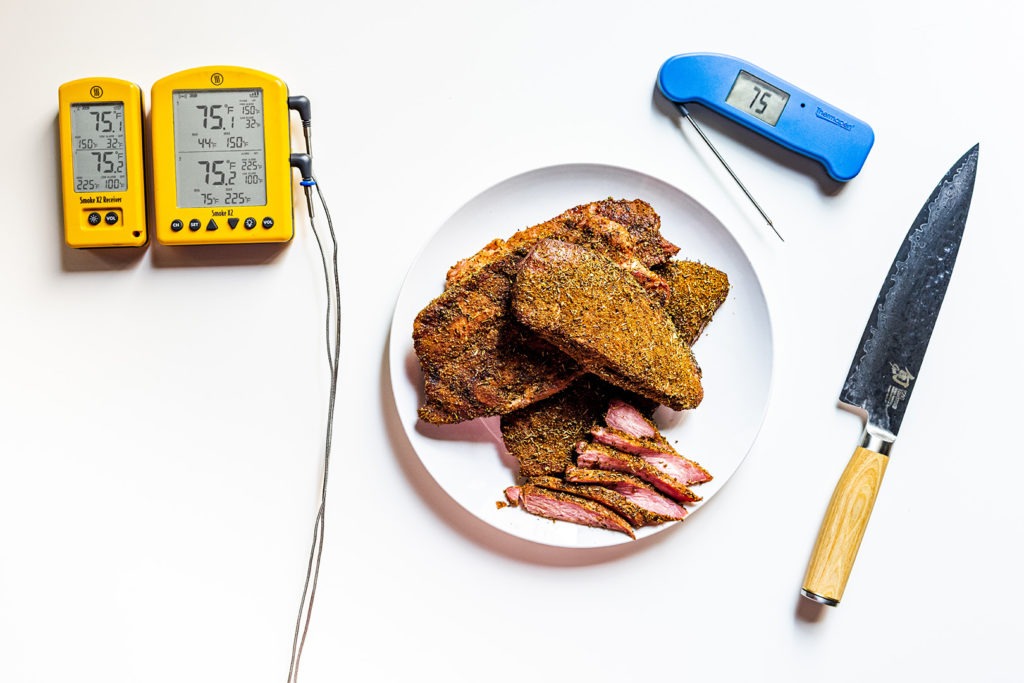
What is tasso ham?
First, it seems necessary to point out that tasso ham is not, technically, even ham. "Ham" refers to a particular cut of pork—namely the hind leg—while tasso ham is made from cured slabs of pork shoulder.
But this is a distinction without a difference, much like insisting that a cucumber is a fruit, not a vegetable. [footnote]Yes, it is technically, botanically a fruit, but we use it as a veg anyhow.[/footnote] No, tasso is not technically ham, but it can be put to use in many places where ham is used. In fact, wherever a ham hock would do, tasso will surely outshine it every time.
Ok, so it isn't (but is) ham. What is it? Tasso is a traditional part of Cajun cooking in Southern Louisiana and the regions round about, where it is made by home cooks as well as local butchers and grocers. It is made of quick-cured slices of pork shoulder (more on that below) that are seasoned with a mix of thyme, marjoram, allspice, pepper, and, of course, cayenne pepper. These seasonings are applied without any pretense of refinement. Tasso is full-flavored, high-voltage food that came here to work, not stand around, and the amount and intensity of the seasoning reflects that.
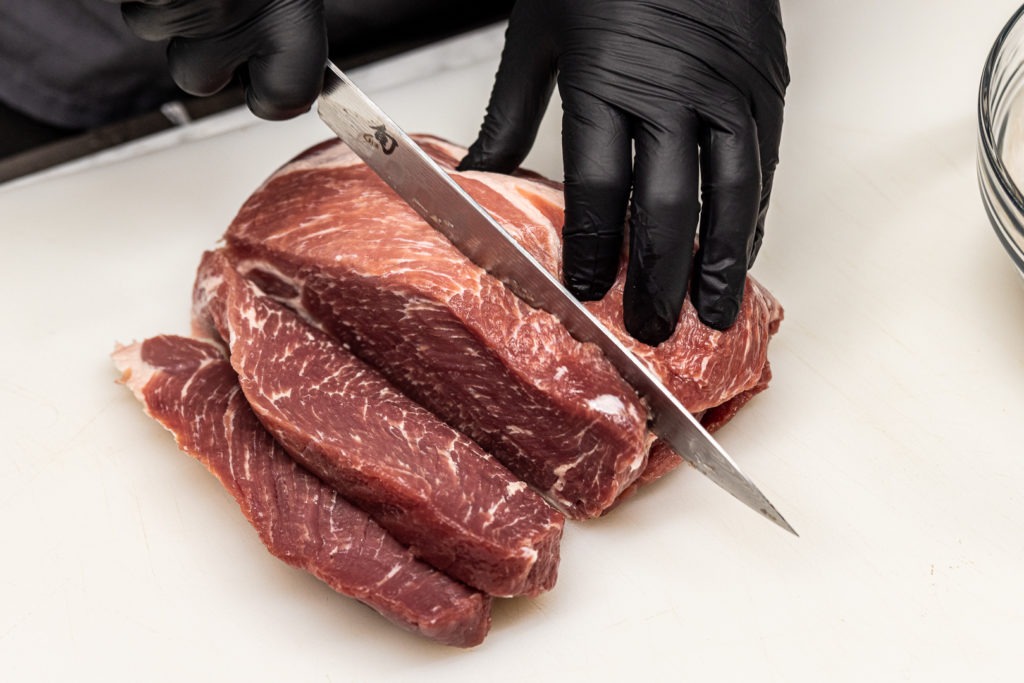
(Incidentally, to make it, slice the shoulder with the grain—about an inch thick. In a steak, or another cut of meat, slicing with the grain would make for stringy, tough meat, but for tasso that doesn't matter. This cutting method will actually help it hold together better during cooking.)
Once cured and seasoned, the tasso is smoked slowly to flavor it and cook it enough to keep well.
When you use tasso, the slabs of ham are often diced and added to stews and soups where they act, not as the main meat "star," but as a hearty, rich flavoring agent. They can even be crisped up in a hot skillet before adding them to your dish, much like you would treat bacon.
How to cure tasso ham
Tasso is cured quickly, which means that we use a quick-curing salt. Prague powder #1, the standard cure for things like this, is a combination of sodium nitrite, salt, and pink color (to delineate it from regular salt). The sodium nitrite is what does the curing, changing the structure of the meat and creating an environment that is hostile to bacteria, especially those that cause botulism.
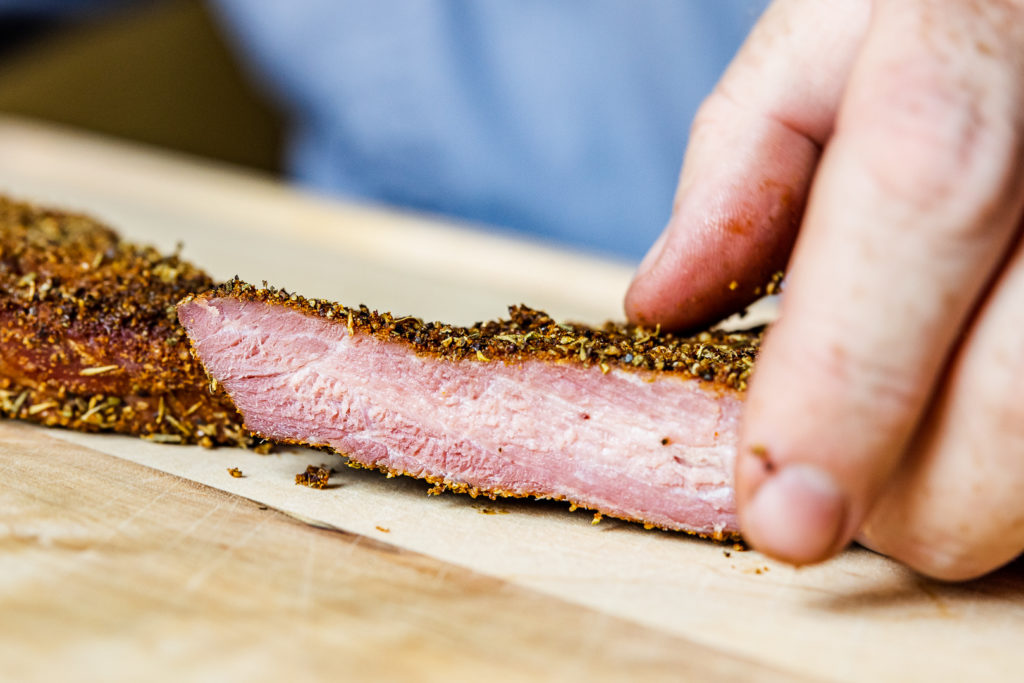
Those nitrites also give cured meats that characteristic cured-meat flavor and pink color. The color, incidentally, doesn't come from the pink dye in the salt, but from the interaction of the nitrite salt with the meat proteins themselves. [footnote]It is very chic right now to have "uncured" hams and sausages. But even those that claim to be uncured are usually made "without nitrates or nitrites except for those found naturally occurring in celery juice and sea salt," a phrase that exploits a labeling loophole. If the ham or salami is pink, there were enough nitrates in there to turn it pink, no matter where they came from.
Note though, that curing salt can be dangerous if you use too much of it. Be sure to weigh your cure carefully. You want enough cure, but by no means do you want too much.
Tasso is cured using the "salt box" method. The thinnish slabs of meat are dredged directly in the cure—a mixture of salt, sugar, and the curing salt—and laid on a sheet tray in the fridge for just a few hours to cure. This direct application of the cure works very quickly and is easier to manage in your fridge than using a bucket of brine for 3–5 days.
Tasso temps: why so low?
For tasso, we want a deep, richly smoky flavor, and that means smoking it at a lower temperature. We used Billows™ BBQ Control Fan to keep our smoker at an even 225°F (107°C) throughout our cook and the ham came out absolutely delicious. But the smoking temp is not the only low temp we're going to encounter here.
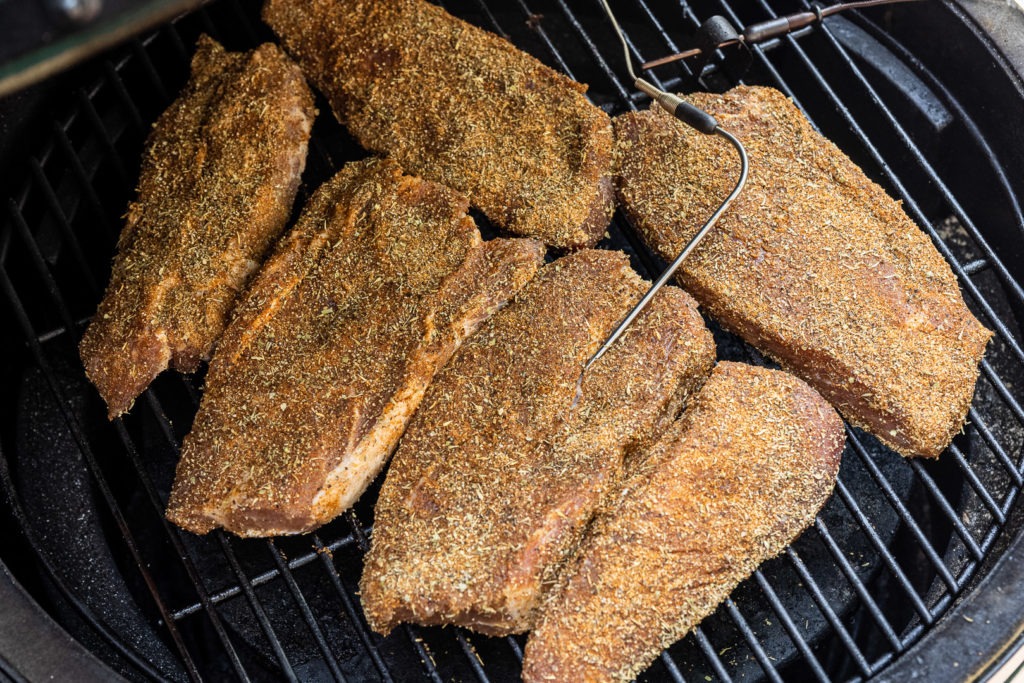
When we smoke tasso ham, we only cook it up to 150°F (66°C). Why is that? After all, this comes from the shoulder, and we all know that pork shoulder reaches optimal shreddy goodness at about 203°F (95°C). But therein lies the rub, as it were. You're not going to have a sandwich full of tasso. In fact, though you may snack on a cube while prepping a stew, you generally won't eat tasso by itself. It is used as a flavoring meat, an ingredient in other things to give them salt and spice and porky goodness—we don't need it to be mega-tender, per se. Cooking it to a mere 150°F (66°C) is faster, still gives it time to smoke, and produces a ham that turns out wonderfully.
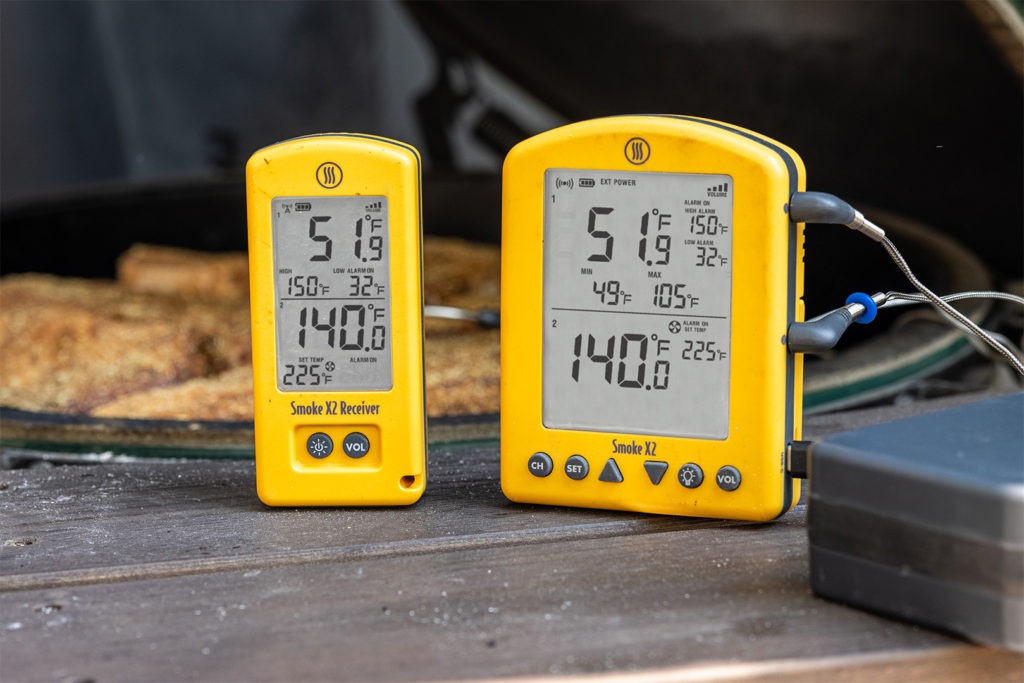
To prevent overcooking, be sure to use a leave-in probe thermometer like Smoke X2™, and also verify the temperature before you take it out of the smoker with a fast and accurate thermometer like Thermapen® ONE. Do that, and you'll end up with just the right texture.
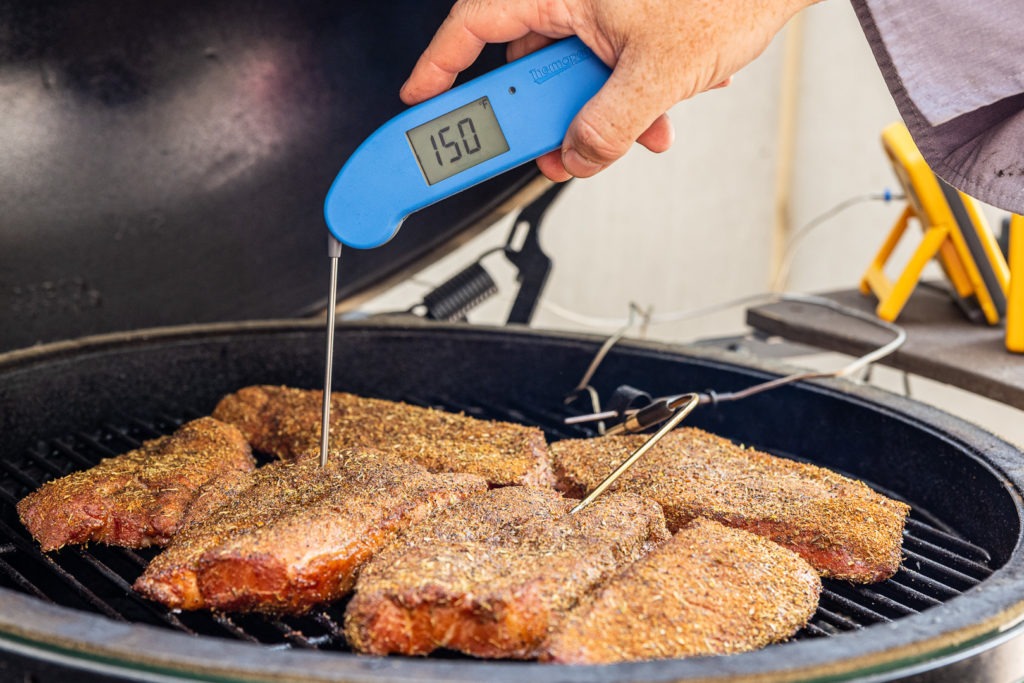
Tasso ham: very country, very farmhouse, very easy
Tasso is a very "country" ingredient and is about as far from refined as a ham can be—and its production reflects that. It is far from difficult to make. It would be no problem to assign a farmhand to go make the tasso during hog-killing season, and I suspect that's really how it evolved. Cut it, dredge it, rinse it, season it, and smoke it. No changing of salts, no rotating hams, no hanging for three months—this is curing meat at its most basic, almost primal level.
I hope you'll try this amazing and easy recipe. It'll make your next cook that much tastier, and with our temperature advice and tools, it'll turn out perfectly every time.





0 comments