

There’s nothing like a fresh, warm donut. Pillowy and soft, they are one of the great achievements of the bready arts.
It is a shame, though, that donuts (we’ll talk names in a minute) seem forever stuck in the province of the diner and the specialty shop. Rows of coffee pots, counter-hops in short aprons slinging Java and sinkers, paper bags, brown boxes and racks and racks of fried creations are all images that the popular mind associates with the donut. Seldom, if ever, do we think of the home counter, the kitchen flour sack, or the stove with an oil pot on it.

To get donuts with that crispy on the outside, pillowy soft on the inside perfection, you have to hope you get to the donut shop at just the right time. Unless, of course, you make your donuts at home. Yes, friend, homemade donuts are possible, and they’re not even that hard to make.
Here, we want to give you the knowledge and tips you need to succeed at frying your own yeast donuts. (Interested in cake donuts? Take a look at our post on homemade cider donuts.) A lot of what you need to succeed is temperature-related, so we’ll be leaning heavily on our ChefAlarm®. With the right tools and a recipe adapted from SeriousEats.com, making great donuts at home is a cinch. Let’s take a look.
First things first: donut vs doughnut
There is a bit of a debate about the “correct” spelling for a fried bready pastry with a hole in the center of it. The origin of the word doughnut seems to come from an old usage of the word nut, meaning a small cookie or cake. A dough-nut, then, would just be a doughy cookie, or a cake made from dough. But the term donut has been in play since at least 1900. Both doughnut and donut are used widely in America, and I tend toward the simpler spelling. The food itself has moved beyond a dough-nut, why shouldn’t the word, as well?
As a matter of historical interest, there is great debate about the origin of the donut with a hole in the center. There are many claims of origination that seem as spurious as they are entertaining. Still, it is certain that sweet, rich fried doughs—with or without holes—have no one point of origin in American or world cultural history. Convergent evolution has yielded a panoply of variations on the delicious theme of deep-fired and sugar-coated dough, and I couldn’t be happier about it.
How to make donuts
There are a few factors that will affect your donut outcome. Using the right tools and the right oil are key to the process, but so are the temperatures you encounter along the way.
Rest your dough
For donuts to get the structure we need, they need some gluten development. But that same gluten development makes them dang hard to roll out. After you make the dough, let it rest. The best thing would be to let them rest in the fridge overnight. This has two advantages. First, longer, cooler fermentation yields better flavor in the final product. Second, making the dough last night so you can fry more quickly this morning is a great idea.
If you can’t give it that much time, give it an hour or so at least for the gluten to slacken. You’ll be much happier when rolling things out.
Let your donuts rise
Light, fluffy donuts just do not happen without proper proofing. If you try to fry them before they’ve risen, you’ll end up with fried bread, sure, but there will be nothing light and delightful about it. Allowing the donuts to proof imbues them with thousands of tiny pockets of air that, when heated, expand, giving the donuts loft and lightness.
To proof them, they are first cut to shape, then allowed to sit at about 85°F (29°C) until they are larger, puffy, and tender-feeling. (The springiness of the dough should be slackened by the time the proof is done. They will not spring back when pressed with your finger.) If you’re not sure about the air temperature where you’re proofing, you can set up your ChefAalrm to monitor it.

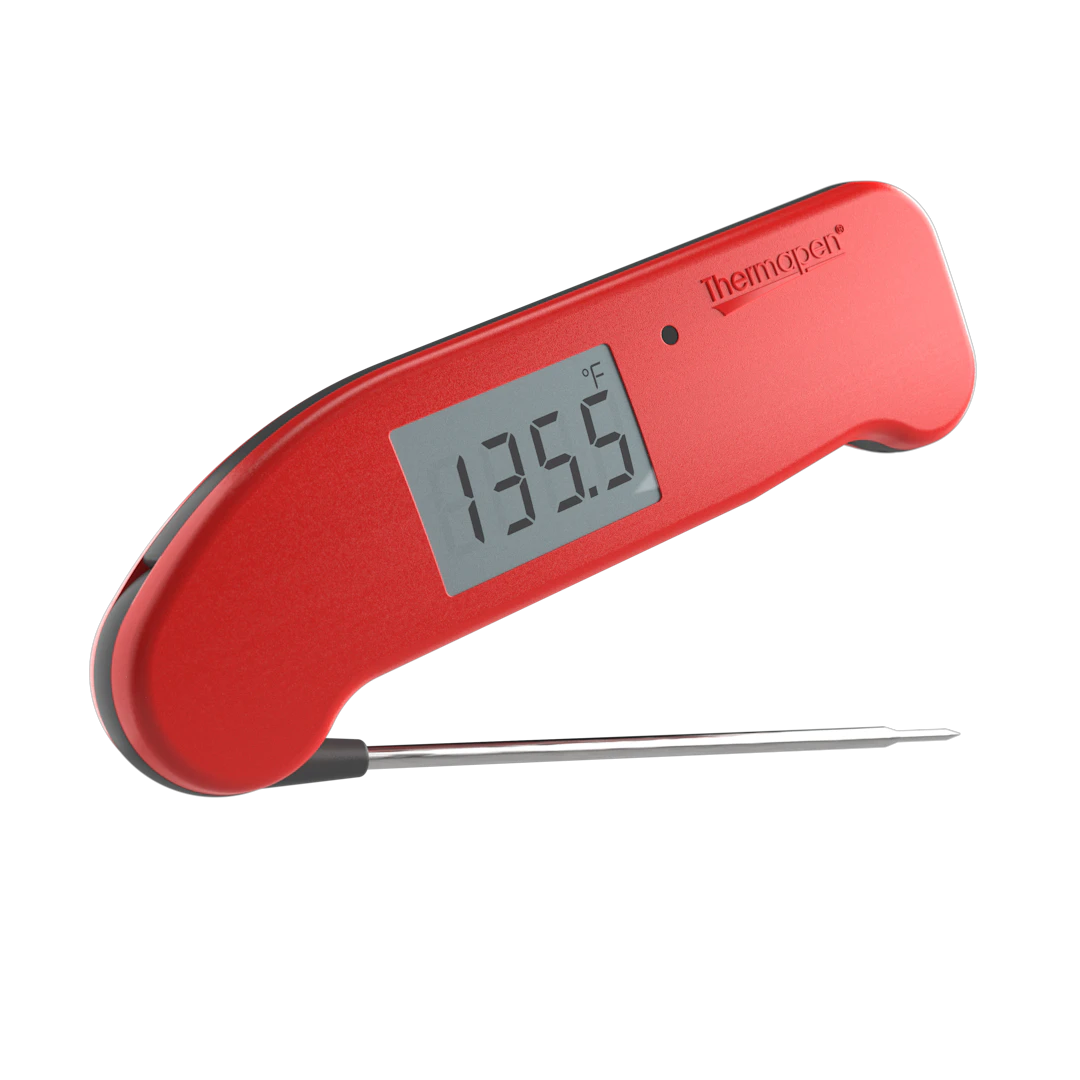
Note: to speed the proof along, start your dough with warm water, about 90°F (32°C) (measure with your Thermapen® ONE). This will activate your yeast more quickly and get the whole proofing process on the road.
Use an appropriate frying vessel
To fry donuts safely, you need a pot large enough to accommodate a couple of quarts of oil and a few donuts. Something deep, heavy, and wide is best. A Dutch oven or a very large saucepan are both good, but J. Kenji Lopéz-Alt uses a wok, a solution that makes a lot of thermal sense.

Use the right oil
Frying donuts is like deep-frying anything else: you should choose a fat or oil with neutral flavor so the food you’re cooking isn’t overwhelmed by the flavor imparted during cooking. Peanut and corn oils are examples of neutral oils. You’ll also need to use an oil that can withstand high temperatures—something with a high “smoke point.”
(Serious Eats has a great article that delves into the details of smoke points of cooking fats with an index of more than twenty different fats.)
We have found that peanut oil or vegetable shortening yield the best texture for donuts, with shortening producing the crispest exteriors. However, frying in shortening can result in a somewhat waxy/fatty mouthfeel, but not everyone finds that to be the case. High-quality shortening will help avoid the problem.
Use the right thermometer and fry at the right temperature
Hands down, the best thermometer for deep frying is the ChefAlarm. The high and low alarms on the ChefAlarm allow you to set a temperature window in which you want to stay while you’re cooking the donuts.
Set your high-temp alarm to 375°F (190°C) and your low-temp alarm for 350°F (177°C) to keep your donuts from cooking to quickly or too slowly.

Don’t crowd the pan
Look, we all want donuts, and we all want them now. But if you put too many in the pot at once, you’re not going to get any donuts that you want to eat. Patience is the watchword when it comes to donut cookery. Cooking only two to four donuts at a time will keep the oil temp from dropping too far during cooking. If you put six donuts in at once, there’s a good chance your oil temp will plummet, and you’ll get greasy, soggy donuts.
The donuts cook for about 2 minutes per side, depending on thickness. Flip them with tongs, chopsticks, a long fork…it doesn’t matter. Just be safe! If you want to check a donut on the first batch through the cook, you can stick it with a Thermapen and look for a reading in the range of 185–190°F (85–88°C).

After you cook one set of donuts, give the oil time to come back up to temp before cooking more. Be patient, and watch your thermometer!
Drain the donuts properly
Draining the donuts on a bed of paper towels will keep them from getting greasy. A cooling rack seems like a good idea, but paper towels actually pull the oil out of the donut and wick it away. A cooling rack lets the oil pool in the bottom of the donut, and that’s just no good.
A note on how to glaze donuts and donut toppings
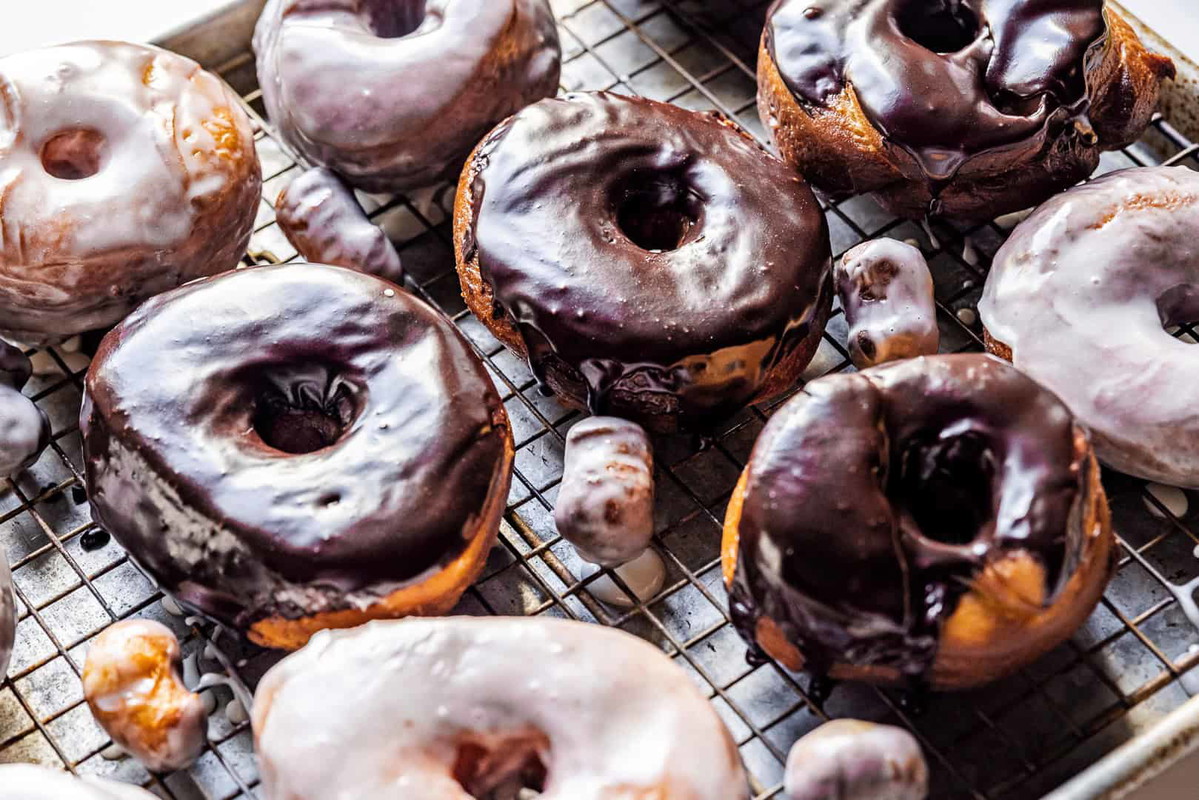
Donuts are best when hot, so you’ll want to serve them as soon as you can, But donuts are also best when glazed, or otherwise frosted. A simple glaze can be made with powdered sugar, vanilla, and some milk, but you can do just about anything you want to make the glaze, from a flavor perspective. The chocolate frosting you see on our donuts simply incorporated a heavy dose of cocoa powder in with the powdered sugar (and a corresponding change in the required hydration). Add some cinnamon to your glaze. Add some tart sour cherry juice. Or cranberry juice. Or horchata! And, of course, there’s nothing wrong with plain sugar. But no matter how you choose to top your donut, you want to do it as soon as it’s cool enough to handle.

The world of donuts need not be confined to the diner or the baker. There’s no reason why we can’t enjoy the glory of fresh, hot donuts in our own homes any time we want, as long as we understand how to make them. This recipe can be your guide in learning these techniques, but the thermal principles that we’ve discussed in the post go well beyond this one recipe. Try making them with different hydrations, different sugar ratios, or even try making spud-nuts using mashed potatoes as part of the dough. The thermal principles are the same, and the results, if you follow those principles, will be delicious.





0 comments